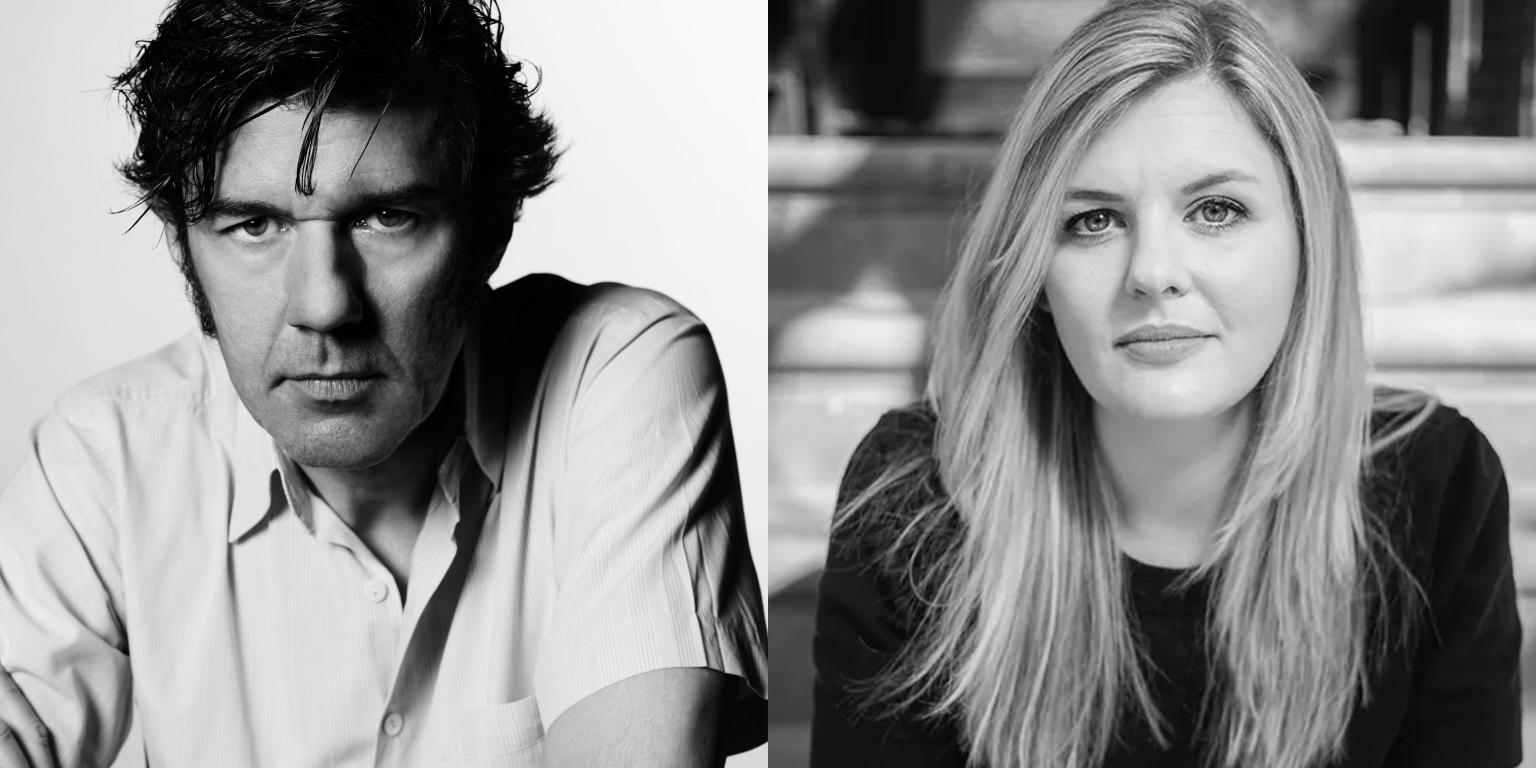
15th Anniversary Edition of the Istanbul International Arts & Culture Festival — IST.FESTIVAL, featured a conversation between Stefan Sagmeister and Julia Halperin, titled Designing the Real: From Album Covers to Algorithms. They explored the relationship between design, music, and technology, revisiting iconic album covers while considering what it means to create something tangible and real in a digital age overflowing with endless images. Their discussion highlighted how visual and auditory design shapes perception and belief.
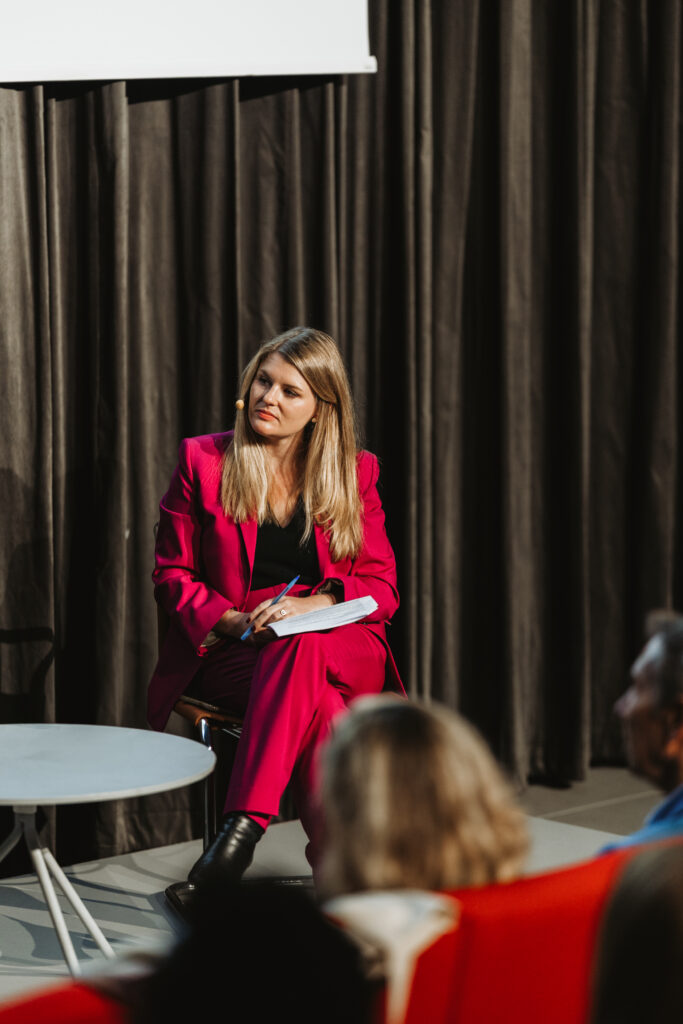
Julia Halperin Hi everyone, good afternoon. Thank you so much to Demet and Alphan for inviting us here. I’m Julia Halperin, I’m a journalist and editor-at-large of Cultured Magazine and I’m thrilled to be in conversation with Stefan Sagmeister. Stefan is a renowned graphic designer, conceptual typographer and performance artist. Born in Austria and based in New York, he first made a name for himself as a designer, speaking of album covers, for musicians, including the Rolling Stones, Aerosmith, and David Byrne. Since then, he has pursued ambitious projects that investigate the potential of design in its broadest sense. He uses a mix of data visualizations, graphic design, object making, and self-experimentation. To explore how design can change our understanding of ourselves and of the world. Maybe that all sounds a little theoretical, but as you’ll hear over the course of the next hour, the work he does is really real. So today we’re gonna talk about some key projects, his perspective on the shifting landscape of design, and how his work invites us to reconsider the reality that we think we know. So before we hear from you, I always like to start by getting a sense of who is in the room and I’m going to ask some questions that are specifically related to Stefan’s projects, as we’ll see. So to start, raise your hand if you’re an artist. Okay, raise your hand if you’re a student. Raise your hand, if you work with artists. Raise your hand if you would consider yourself an optimist. I knew you were going to raise your hand, Jeff.
Julia Halperin Raise your hand if you consider yourself a pessimist. Okay, we got a few. I would raise my hand, maybe. And lastly, raise your hand if you would describe yourself as happy. Raise your hands if you like to be happier. All right, we’ll keep those in mind as we dive in. I wanna start with your work as an album designer. That’s the thing that you may be most known for. And I don’t think many of us, other than those who have made albums or designed album covers, really understand the actual process of what that’s like. It seems a little bit mysterious. So, can you start by just explaining and walking us through that process?
“I still believe that music is possibly the most emotionally touching of all of the arts. I don’t know of any other arts that I could put on and it would change the way I feel and change my mood, that I can do very routinely with music.”
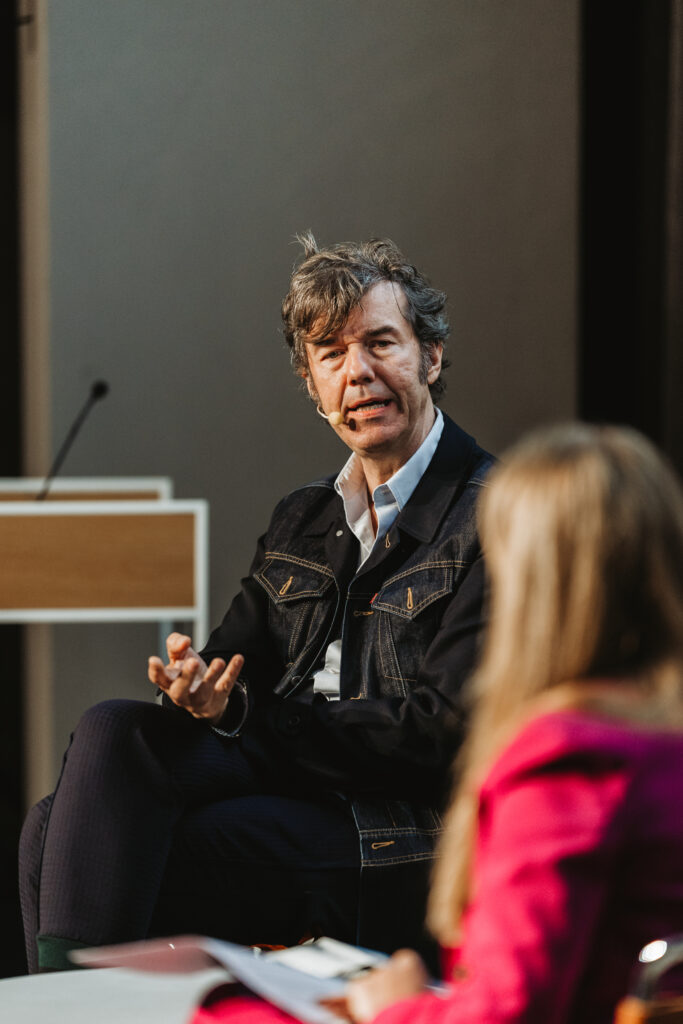
Stefan Sagmeister Well, I would… First, thanks for that fantastic introduction. As an aside, can we get two waters so we don’t have to share? And the process was actually very similar. I would meet the band in the studio. If the band wasn’t available, I wouldn’t take on the job. And we would talk in the studios about why they’re making a new album. Thank you. What the story is, what’s the motivation behind the songs is what the songs are about. And I would try to not talk about the cover itself at all, because I felt that this transition or this translation from something as deeply emotional as music into some but that is inherently non-visual into a visual was really my job. And we did that for quite a long while, uh for at a time when many musicians weren’t that sophisticated visually, David Byrne being an exception there. And I still even to this day really love that design of that transition from that because I still believe that music is possibly the most emotionally touching of all of the arts. I don’t know of any other arts that I could put on and it would change the way I feel and change my mood, that I can do very routinely with music. From that point of view, I was very often jealous of my clients because they could do that, which I tried to achieve but could never. And that was basically it. And then of course, there are bands that have an incredible amount of history, like let’s say the Stones, other things, other things would come into, like let say the brief of Mick Jagger that he definitely wanted some synergy between the cover and the stage. He wanted some sort of symbol that would look good, embroidered on a baseball cap, because the stones make much more financial gain through the sale of merchandise than they do from the music. So there are these aspects to enter into it, but ultimately it was a translation.
Julia Halperin And how do you navigate that, like for example with the Stones where, you know, Mick Jagger thinks he knows what he wants it to look like, and you have to get him off that path and take him somewhere else?
Stefan Sagmeister While in that particular case, it was difficult because I expected Mr. Jagger to be very sophisticated, because there was a fantastic history of great covers. And there’s actually a wonderful little anecdote from it when I first met him and Charlie Watts in Los Angeles and I asked him what his favorite Stones covers would be and he said Exile on Main Street, Some Girls and Sticky Fingers. And I said we’ll have a fantastic time together because I literally honestly would have said the same three covers only in different order. I would have said Sticky Fingers, Some Girls, and Exile. And then I see Charlie Watts leaning over and asking him what’s on Sticky Fingers. Which to me, like everybody I know, thinks of Sticky Fingers as maybe the pinnacle of album cover design of all time. I mean, there is Sargent Pepper’s Dark Side of the Moon and Stickyfingers. Those are the three covers. And of course, and the Lady Gaga cover, obviously. And that the drummer of the band would have no clue. And Jagger saying, “Oh, you know, Charlie, it’s the one with the zipper, the one that Andy did.” Andy, of course, being Andy Warhol. So. That long story led to the fact that, even though he was at every meeting, possibly the best dressed man I’ve ever met, he had terrible taste, terrible, and he made me go down routes that would have not gone down for any other client that would not have, that was not Mick Jagger. But at the end we reached some sort of mediocrity that we are both able to live with.
Julia Halperin I think that is sometimes the case with design, right? You’re navigating, in some cases, the client and all of their constituents and your own vision. But you’ve also done a lot of projects that are entirely non-commercial and entirely self-generated, and one of those is the Happiness Project. And so this was a 10-year odyssey where you sought to see if you could treat yourself and your happiness like a design problem and enhance it. So you had three methods. You had meditation, medication, and cognitive therapy. And you made a film and an exhibition. And now it’s been almost 10 years since that project. And so I wondered, what has stuck with you?
Stefan Sagmeister The probably most interesting part of that was that at the very beginning, I thought it would be interesting to do a project about happiness because it would force me into doing deep research into it. And who knows, maybe I would even come out happier at the end. The original idea was to make a film about happiness in general. That turned out to be impossible, because for me… Because I just wasn’t, I didn’t study psychology, I wasn’t a positive psychologist, I didn’t really have any claim to have a properly learned opinion on the subject, which turned the film into my own happiness, because I was an expert on that, which of course then became deeply personal. What I learned after eight years of making this film and the exhibition was something that I knew from the beginning but were not able to eternalize because of my lack of engagement with it. I think the problem with almost all self-help books is not that the information in it is wrong. It’s that reading a book is too loose of an engagement to transform something from knowledge into something that is deeply ingrained into your life. In the beginning of the project I must have read about 120 books on the subject. I called up the guy who was the best, who was my favorite book, a guy called Jonathan Height, who is a very smart professor now at NYU and he became scientific advisor of the project, and he had concluded the book that I had read before I started. The idea that you can’t really pursue happiness directly, but what you can do is you can look at all of your relationships and see if you can lift them up onto a somewhat higher level so that it will allow unexpected little pieces of happiness to come out from in between those relationships. And you can do the same thing with your work. And you can do the same thing with something that’s bigger than you. And I knew this and I understood it. And after eight years of engaging with this subject, I somehow, without noticing it, was able to actually incorporate it in my life.
Julia Halperin Can you give an example?
Stefan Sagmeister Getting to work, for example. I, very soon after that, gave up commercial work completely. Not necessarily because I started to hate commercial work, but because I felt I have done my share of that, and it wasn’t as interesting. It was the same with album covers ultimately. Album cover number 50 didn’t have the same engagement as the first one. I just wasn’t that interested anymore in it, because the processes were repetitive and it became very similar with the commercial work. That, very exactly like Jonathan Heist predicted it, allowed unexpected little pieces of happiness to come through in between. Like this morning, when I got the mail from a favorite place in Paris that they wanna do an exhibition about my new subject, which… I get so much of a bigger kick out of, let’s say, a client calling to do a big campaign. And I think it has something to do with the newness of it.
Julia Halperin Let’s talk about your most recent project. It’s called Now Is Better. And it actually has a very interesting relationship to the theme of what is really real. And you first developed the seed idea for this project after speaking with a lawyer at dinner, which is not something you hear all the time. People develop seeds of new ideas for projects after speaking to lawyers at dinners. Can you tell us that story?
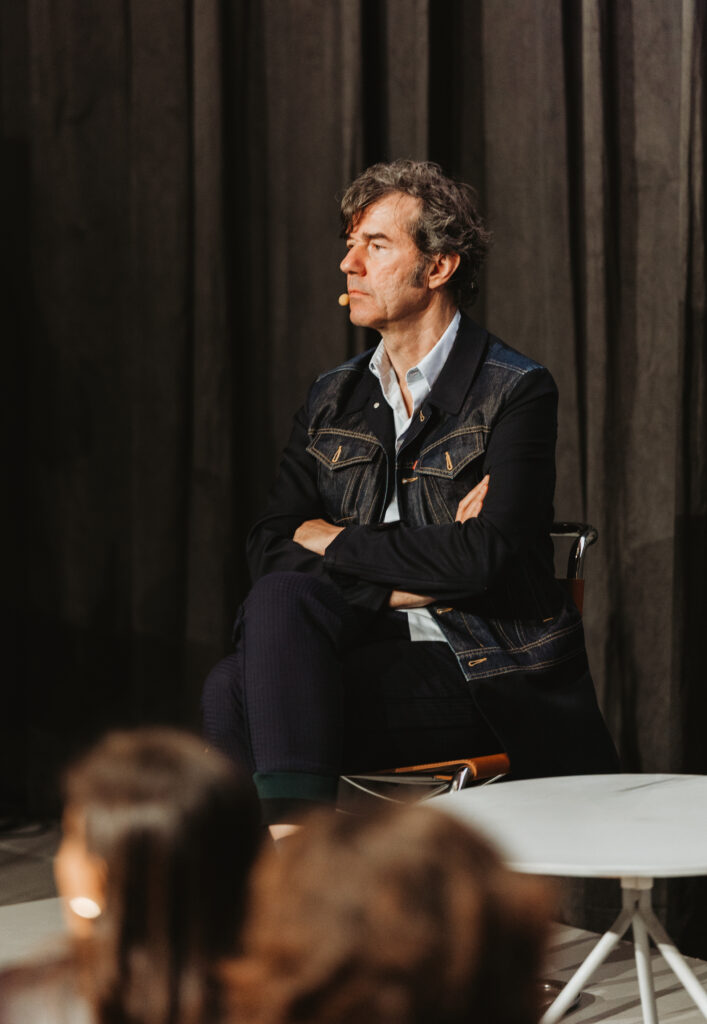
“I also still love shitty news. I also still love the negativity, be it personally told to me or worldwide. And what I really discovered is that they’re two very distinct ways of looking at the world. One is short-term, everything is shit. One is long-term. Everything is fantastic.”
Stefan Sagmeister Sure. These were salon-like dinners, and this was a guy who served at the European Court, read five newspapers in three languages every day, and he told me what we see right now in… This was seven or eight years ago… What we see right now in Poland, in Brazil, but also in Hungary, really means the end of modern democracy. And after dinner, I looked up modern democracy. What is it? When did it start? It turned out that two hundred years ago, there was a single democratic country on Earth, the United States. A hundred years ago, they were sixteen. Right now, the United Nations says that there are eighty-six countries that they consider to be democratic. It’s the first time in human history that the majority of humanity lives in a democratic system. So this very well-educated man could not have been more wrong. He had no idea about the world that he lived in, no idea! And that seemed such an interesting and juicy communication problem to me, particularly because so many friends, so many of my friends think exactly the same way. And when I looked into it, it just endowed to be mostly a problem of time. Because of your profession… The time frame, the news cycle has become shorter, shorter, and shorter. And the shorter the cycle, the more negative the news. You see it very clearly. We talked yesterday. The New Yorker, by being a weekly, by just being a weekly, is so much more positive than the New York Times. The New York Times has gotten so much negative ever since it’s online. Because they know that what we click on, it’s not that they are evil, it’s us. The strangeness is that I’ve been dealing with this for eight years and I also still love shitty news. I also still love the negativity, be it personally told to me or worldwide. And what I really discovered is that they’re two very distinct ways of looking at the world. One is short-term, everything is shit. One is long-term. Everything is fantastic. And it’s literally 180 degrees different. And since then, I’ve tried to somehow communicate this because the negativity has consequences. One is that in a survey from last year, 53% of all young people worldwide, a huge survey, 10,000 participants, saw that humanity will end within their lifetime. These people sit in their bedrooms depressed. They don’t do anything against global warming or the dying of species. The number two is that all this negativity favors extremes. Making America great again is only possible when the majority of the population thinks it’s shit. I think the New York Times is as much responsible for Trump as Fox News is. I actually said that recently in Mexico City and it turned out that the cultural chief of the New York Times was at the table. She was not happy with that. The reason I think this is important is that if I look at social change and how it happened in the last decades, let’s say the unbelievable success of the no-smoking campaigns, most countries cut their smokers in half and this was achieved by the carrot and the stick. Positive messages, you’re going to be healthy, you are going to save money. Negative messages. Here is a photo of the cancer you’re going to get right on your cigarette pack. Both of those directions were necessary and right now the media does a fantastic job at delivering the stick and this is my own little attempt to offer a little bite of the carrot.
Julia Halperin And for those who haven’t seen it or are just seeing it for the first time as it scrolls through, can you talk a little bit about how you realized this idea visually?
Stefan Sagmeister Well, I looked for a medium to do this, to publicize this. So everything digital went out immediately because it’s so short-term. Like we did an interactive installation 20 years ago in an edition of six. We sold one to the Art Institute in Chicago, the second to SF MoMA. And now we had two more museums trying to buy one. We couldn’t sell it to them because we can’t make the sucker work on contemporary operating systems. So, it was clear there was no digital. And my great-great-grandfather had a tiny antique store in Western Austria, and everything that he couldn’t sell wound up in the attic of the house that I grew up in. So I took many of those leftover paintings and cut gigantic holes into them and put things like new inserts in there that look like minimalism but really are data visualizations of something that then became much better in the past 200 years. As a designer, I thought this was kind of neat, that when we started to gather that data, that piece already existed. And of course, if you’re talking about long-term thinking, you would like that thing to be around long-term, maybe not as long as Jeff’s piece for the moon, but still a while, and of course a very, very good method to… Figure out what could be around for the long term is pieces that have already proven to be around for hundreds of years.
Julia Halperin And some of the examples of the subjects that you’ve looked at are things like, you know, the number of women who are able to vote or the number of people who are in poverty. But I’m gonna, are you gonna let me push you a little bit on this?
Stefan Sagmeister Please.
Julia Halperin Okay. So the part of the concepts that I struggle with is that, you’ve said before, most people agree on certain things being better. You know, it’s better to be healthy than sick. It’s better to be in a democracy than in a dictatorship. I’m American, so I can only speak for my experience in America, but I would say these days, I don’t know if that’s totally true. We can’t agree as to whether vaccines make us healthy or sick. We can’t agree on what a democracy looks like versus a dictatorship, and so I’m curious, is there something unique about this moment in that our sense of shared reality is breaking down?
Stefan Sagmeister But I think that… Every progress created through technology or through other means, has side effects that are unpredictable. With every step of that progress, we absolutely need them to take care of the side effects before we can move on again. You know, we are still working out the side effects of the automobile. And I think we are getting there. I think that we are probably at our best point in working those side effects out. Not all of them, but many. In general, I believe, and I think Jeff had a version of this, that when I look back at the history of technology, we always, every technology was used for good and bad, but we tended to use it more for good than bad. Like with the invention of the hammer, more of us built a house than killed the neighbor. I have no reason to believe that this stops, because we’ve done that for thousands of years. So, I also believe that optimism makes rational sense. Like, if I have to solve a problem, and my chances of solving it are 50-50, I probably can push it to 55-45, or maybe to 60-40, by approaching that problem in a good spirit. So it just makes sense. There was an interesting thing that I talked about with a journalist who works for Forbes, who had interviewed almost all of the Fortune 500 companies. And she told me that all of them are 100% not 99, a hundred percent the optimists. All of them. So, no matter what you think about humanity, just if you want to be successful. That’s the stance to be in.
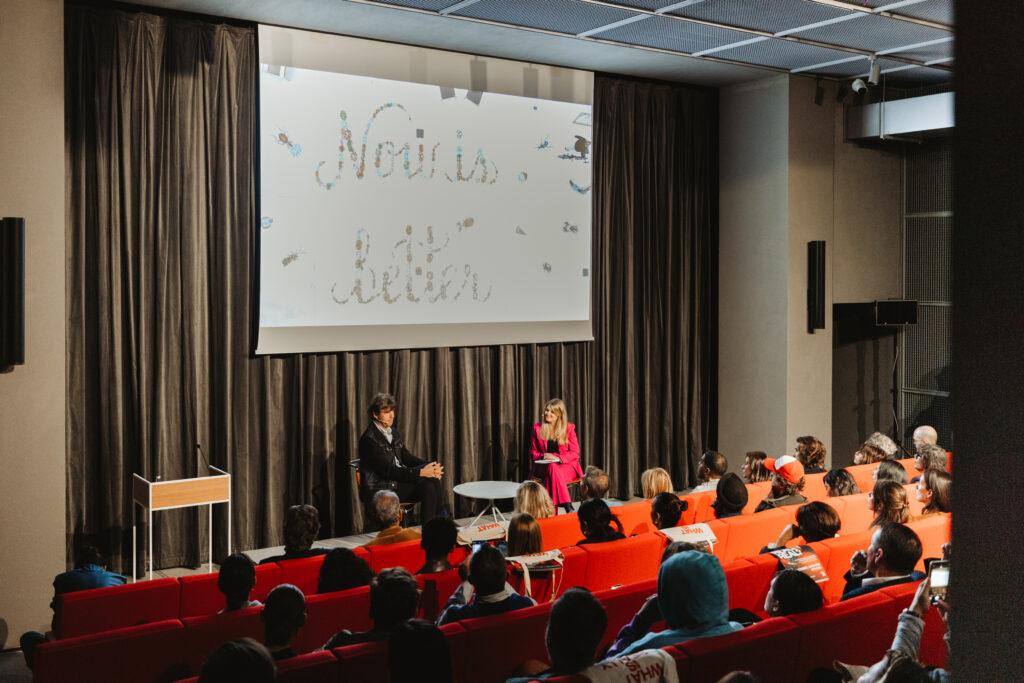
Julia Halperin Well, and I was interested to hear you, you’ve said before that, you know, you’ve taken this project all over the world, including relatively recently to Ukraine. And I would think somewhere like that would, you know something that’s called Now is Better might be a hard sell.
Stefan Sagmeister I thought so too. Actually, that’s how the project arrived. I was on a German podcast, and the podcaster asked me, would you bring this project to Ukraine? And I said no. I think that people who have bombs falling on their heads are inherently uninterested in the fact that fewer people die in wars now than they did a hundred years ago. It’s just not something that I believe people can hear. A week later, I got an email from a woman in Ukraine, in Lviv, saying she disagrees, she wants this message. And I said, well, what do you want to do? And she said, why don’t we organize a talk where you are on Zoom and I rent a theater and I have a hundred people, very similar to here, listening to you. And I said I’ll do it if we have a full hour of discussion afterwards. And in that discussion everybody was enthusiastic. People said, “Oh, I know this publisher, let’s get your book. Now it’s better published in Ukraine.” “Oh let’s bring the exhibition over.” I didn’t believe anything of this would actually happen but it did and we had an exhibition in Lviv and then another one in Kiev. In Lviv, I spoke in front of 4,000 people. The book is now in its second printing. The message has never, ever anywhere in the world been so enthusiastically embraced than in the war-torn country. The people I get that by far the most pushback are rich. Well-to-do satisfies people who believe that everybody in the world is doing really shitty and that I’m out of my mind with my optimism.
Julia Halperin Well, another way that you have gone against the grain is that you famously take long sabbaticals, so every seven years, is that right? You take a year off from the work you were doing. Tell us first, this was a big risk at the beginning of the process. Why did you do it and why did you decide, okay, everybody else waits until the end of their life to have leisure time and I’m gonna break it up and put it in the middle.
Stefan Sagmeister Well, it was a necessity. I started the studio in ’93. By 99, I felt that the work was getting repetitive. It took me a year to get my guts together, to finally say I need some sort of change. And I was scared, like really scared. I thought, you know, just started the Studio. It was successful. We did the kind of work that I wanted to do. And this was, for those of you old enough to think, back in 1999-2000 was the first iteration of the internet boom in design. Everybody was raking in the money. People were designing websites for hundreds of thousands of dollars because clients didn’t know how easy this was to design them, and it felt very unprofessional to miss out on that financial bonanza and close the studio for a year. I also felt that the clients would all go away. And I felt we would be forgotten in the fast world of design in New York City. None of these assumptions happened, none. No clients thought that we were unprofessional, most thought I would love to do this too. Lou Reed even moved his album release date so that we could still design the next album for him. My parents were fine with it. So none of these horrors that I envisioned happened. And the first year turned out to be so joyful and productive that the second, third, and fourth sabbaticals were very easy and completely fear-free. And I’ve only been back from the last one for five days. I was in Guadalajara in Mexico. Which turned out to be a fantastic place for a sabbatical because it’s a very, very large city with 17 million people, very similar in size to Istanbul. Because it’s relatively inexpensive, all the craft and all the industry is in the city. So if you need to have, which I had, in need for glass marbles to be made, custom 150,000, you can take an Uber for 20 minutes and go to the glass marble factory. And the same is true for, I don’t know, bronze casting and things that you probably can find somewhere in the United States too. But they’re so far away and so difficult to navigate that you might not do it there. It was easier to do it.
Julia Halperin What would you say that your sort of big takeaway from this particular sabbatical was if you have one?
“The sabbaticals, more than anything else that I did in my life, made sure that my work remained a calling and didn’t deteriorate into a career.”
Stefan Sagmeister This particular one or in general? This particular one, I don’t know, because I’m too close to it, and I think I probably could tell you in five years. In general, I would say all, not all, but the majority of all the work that I now think was worth my mile to do came out of the sabbaticals, out of thinking, out of ideas that were part of the sabbaticals. And maybe more important. The sabbaticals, more than anything else that I did in my life, made sure that my work remained a calling and didn’t deteriorate into a career. Like so many, I taught one class in New York at the School of Visual Arts for many, many, many years and so many of my students, when they come as students, are completely utterly gung-ho design. And if I run into them three years after graduation, I feel they’re now in a career, You know beer, they’re not quite sure if all that hard work is really worth it, or even worse, when it just becomes a job where on Wednesday they hope it’s Friday. And I think I could avoid that. Also, on that vein, I at one time did a talk at TED, and like most TED talks, it had millions of views, and so here and there I run into people that say, “I saw your talk and I did a sabbatical, and obviously I asked, “So, how was it?” Every single person that I talked to, and I talked to more than a hundred, had glossy eyes when they answered. And the phrase, “Best thing I’ve ever done”, was somehow coming up within that conversation. And it turned out that when I asked, so what did you do before? What do you do now? They were rich people, poor people, people with families, single people, who worked for large corporations, had small studios, freelancers. It really ran the gamut.
Julia Halperin Let’s say for people who, for whatever reason or another, can’t take a full year’s sabbatical. Are there little ways that you can carve out that kind of space in your regular life? How would you recommend people cultivate that sense of joy and flexibility and open-mindedness if they can’t take a year off?
Stefan Sagmeister I think there’s all sorts of possibilities. I have a friend who does Monday to Thursday commercial work and has Friday, Saturday, Sunday reserved for experiments. I have another friend in Chicago, who does it until three in the afternoon. He does his job. And from three on, it’s whatever. I think the important point to keep in mind is that once you reserve that time, that time needs to be sacred. It cannot be touched because the commercial work or your job comes with deadlines and I fooled myself there for a long time, it’s much more difficult to do your own stuff. So, I for a long while took the excuse of deadlines to not have to do my own stuff because it’s so much scarier because if you fail in your own stuff, then you’re really a dickhead because very clearly you can’t blame a client for mucking it up. But if you are able to keep that time really untouched by deadlines, whatever works. I tried for three months, and that didn’t work for me. That seemed too much like a holiday. For me, the year works really well because at the beginning of the year, I can’t even think of the end of it. There is just so much beautiful space and time in front of me that allows me to fill it with things. That I would not have the guts to fill it with otherwise.
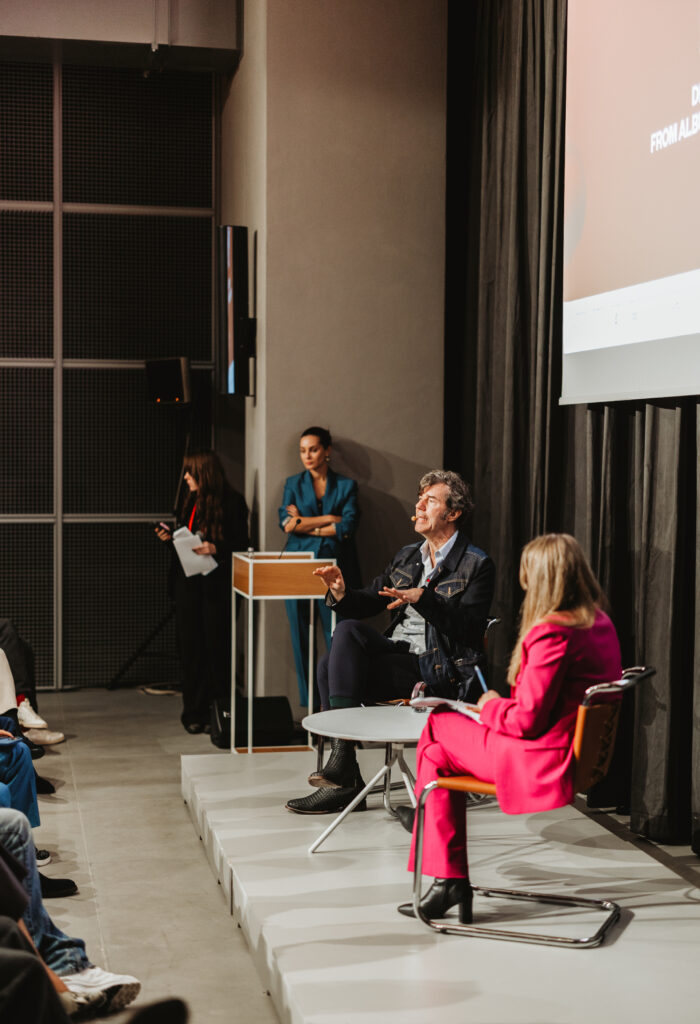
Julia Halperin Considering what you do and the theme of the festival, I would be remiss if I didn’t ask about AI. You’ve been manipulating imagery for a long time and now you can log on and I can do it. I can’t tell a lot of the time when an image has been manipulated by AI or not. So my first question for you as someone who is extremely visually literate is, can you tell? What is real?
Stefan Sagmeister Well, if it’s a contest where I’m tested, I can’t. So let’s say that, you know, I think the New York Times ran things, which of these two put this wheel, very difficult. But the work out there, you can tell in a second. Meaning I just went to the Brooklyn Museum and we took the subway and somebody had told me that they feel 70% of all the posters in the subway are AI. And I wouldn’t go as high as 70%, but you can tell because everything is shit, it’s just so bad. I think what happens right now, and we’ve seen a mild version of this when Photoshop came out. We are just so lazy that we all use Photoshop every, for one thing, it’s such a sophisticated program that we get lost in it. It has too little, it has too few limitations. And AI of course is much more sophisticated than Photoshop, and we are again in that world where we can do anything. And as a result, do exactly nothing or do all the same easy, super-easy thing. I found a couple of people or, I saw some instances of work that was done in AI that I thought was good. And when I did a little bit of research, I found that these people did good work before AI. And the people who did terrible shit before are still doing terrible shit. Possibly worse, because we saw that, like I’m old enough, I actually was trained manually, like we had a computer in school, but it was a joke, you could like, you know, click on things, on pixels, and if you clicked on enough pixels, you could get some sort of form around it. And I think that if you look at specifically my section of design, before the computer, you need to think. It was so difficult to execute something that you needed to think long and hard before you executed it, because it was just so much work to get there. The computer made that much, much easier and you got there much faster. Now you basically have the end result, the slick end result in a second, which I think is not good for most of us. Because we can get the end result so fast, we think that we don’t need to think properly. Should we even do this? Like, do I really need a pink dinosaur being chased by a pussycat? Which, if you would have had to execute that as an oil painting, you probably would. And you might have changed the pussycat to something else, whatever. Long in general, I’m again, like Jeff is, very positive about it. I probably will never do anything that has, where the end result is AI, simply because I’m not that kind of designer, like I was never really that interested in technology being the center of my work. Almost the opposite. I always felt that in communication it was super important to have the human, like that it was, look, almost all of design since modernism was made to look like it was done by a machine with incredible slickness. I tried to break that by using, in a lot of our work, handwriting or making sure that visually but also conceptually, it was very clear that this was made by a human being. I think that ultimately this is what we all want, community, being, talking to each other. My guess would be that this will become even more important with AI, that we put them in the same way that if you look at the pockets of this world, most people are in digital jobs. Let’s say Williamsburg, Brooklyn. Nowhere else in the world does handicraft have such a resurrection that reaches from making your own jams to woodworking courses. So very, very, and I’ve spoken in enough digital conferences where after my speech, my talk, 20-year-olds surrounded me and asked me how they could possibly get into print or into doing something that was haptically touchable. I’m sure we’ll always have that, I cannot see any other way.
Julia Halperin Well thank you, Stefan. It’s been a delight to hear from you.