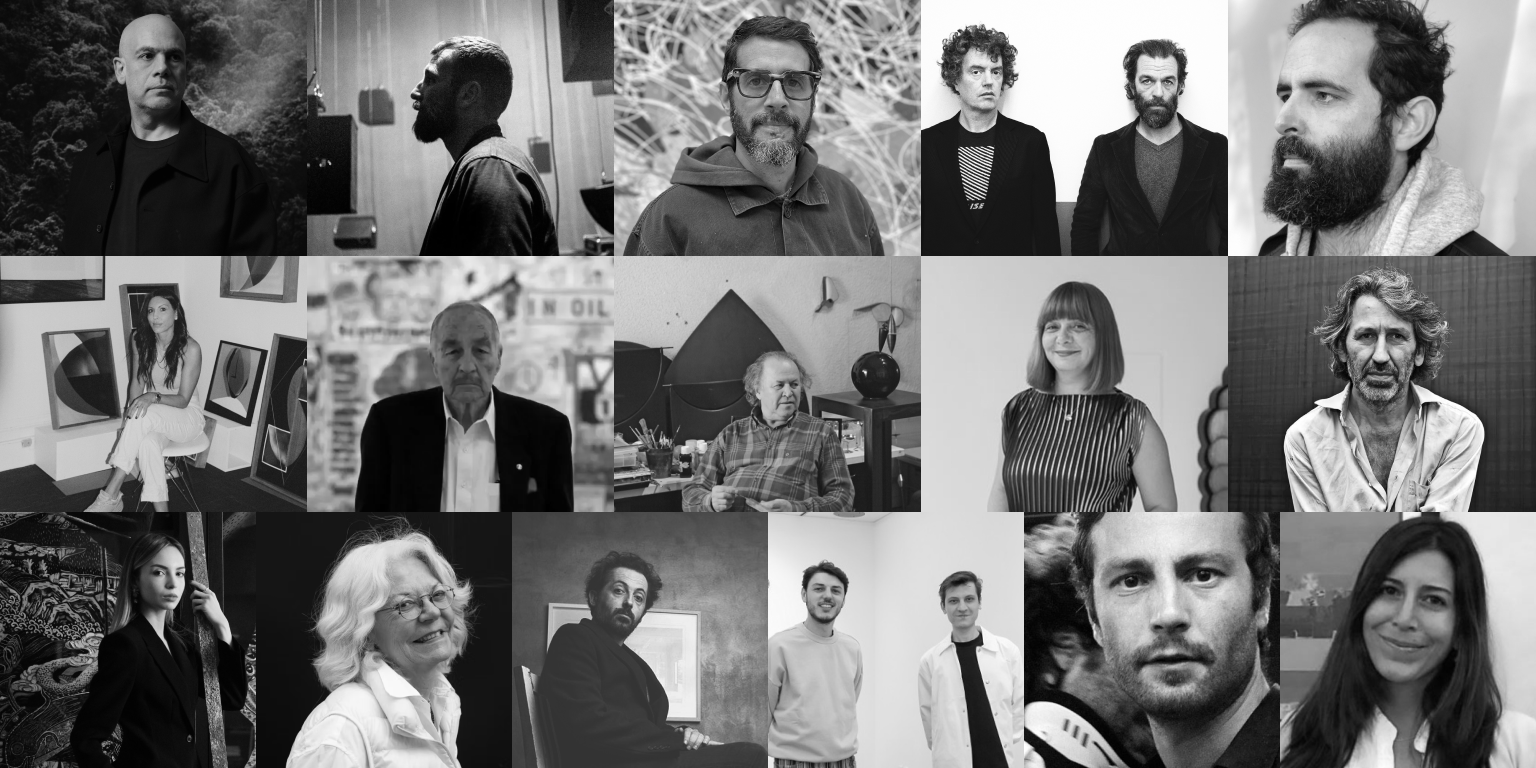
The closing panel of the 15th Anniversary Edition of the Istanbul International Arts & Culture Festival — IST.FESTIVAL — brought together the artists of NEARNESS: A Neighborhood Exhibition, moderated by Ayla Jean Yackley. Titled What is Really Real? On NEARNESS: A Neighborhood Exhibition, the conversation reflected on how art can mirror, distort, and redefine what we consider real. Set within the living streets of Arnavutköy, the discussion explored how art connects people to place, to one another, and to the shifting ground of reality itself.
Sedef Avcı What is really real? For the final panel of the festival, we return to where it all began: the neighborhood. Financial Times editor Ayla Jean Yackley leads the artists of Nearness: A Neighborhood Exhibition in a conversation on how art can bring us closer to one another.
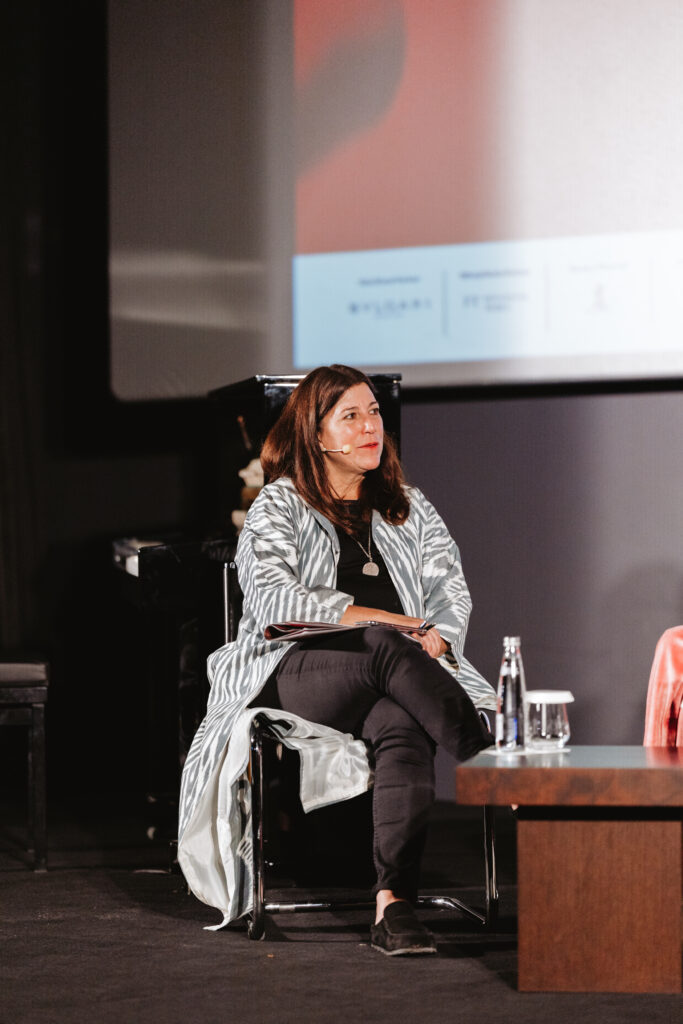
”I think that in some of the earlier discussions over the last two days, we’ve talked about how our basic faith and an objective truth and a shared reality has been splintering for a long time, and that we may have artists to thank or blame. For helping to get us here.”
–Ayla Jean Yackley
Ayla Jean Yackley So, welcome back, everyone. I want to begin by reassuring you all that this is really happening. You’re not imagining it, we’re all here. We may not actually resolve the overarching question that this gathering has posed, but I think Demet Hanım very beautifully says it in her curatorial statement and that I hope that this experience will be part of creating that quiet wonder of something true. So that’s my intention for this panel today. I think that in some of the earlier discussions over the last two days, we’ve talked about how our basic faith and an objective truth and a shared reality has been splintering for a long time, and that we may have artists to thank or blame. For helping to get us here. But I would say that one possible trend that we can talk about is how that’s sort of come full circle. That it’s oftentimes today artists who are truth seeking, who are using their art to expose hidden realities and uncomfortable truths that we may not want to face. And that they are taking on the role of journalists or researchers and detectives, whether the issues that they tackle are political, ecological, or personal. So with that in mind, I wanna make a point that this isn’t to say that artists don’t continue to bend reality as they pursue it. The five artists who are here today, each have a very distinct, discreet way of approaching what they see is real. So without further I do, I think we can go right in and it’s Jonah who’s going first, so. You lost the coin toss, so… And, but the reason I want to start with you is because, you know, the worlds that you create with your artistic partner, Justin Lowe, are, you know, very fantastical and futuristic, but oddly seem entirely possible. And if you wouldn’t mind spending a bit of time talking about how these fictional environments that you created still show us what is real or what can be real, and how you’re able to do that, how you are able to get at the nub of that through these very much created environments. That would be a really, really a great, nice place to start.
Jonah Freeman Yeah, I mean, I think what Justin and I have been doing for almost 20 years now is what we think of as rooms, as sculptures, these environments we create. And so we’re very much focused on the materiality of these environments. And so, we spend a lot of time kind of creating the residue of use and the residue of time and really creating details. So when you’re as a viewer, as a spectator, or a viewer moving through these spaces. You’re really confronted with the materiality of this environment and you’re sort of feeling the architecture, feeling the room, feeling the history and although we’re, you know, it’s very much like it has a bit of like a cinema aspect to it, a bit of a set building aspect to it but we’re very much think of it as sculpture and I feel like when you’re in the presence of a sculpture you’re really being confronted with material just in the same way like when you’re around I say a Richard Serra or something like that you’re confronted with the weight of the metal. And that’s sort of the ultimate experience of the work. It’s just that this being in space.
Ayla Jean Yackley Again, with this idea of you’re fully entering, it’s immersive is I think another way to think about it. The detail that goes into actually creating this and imagining this, what are the sort of real world roots that or the foundation or the planks that you rely on to get there, to create something that is still recognizable somehow?
Jonah Freeman Yeah, there’s a deep historical and narrative armature to all the pieces that are usually, they’re often concocted in script format where you kind of, I write a story that kind of outlines what this show or exhibition is gonna be about. And a lot of it is rooted in histories of Cold War counterculture and psychedelic drugs and things like that. For instance, the piece that’s here is partly on Operation Mockingbird, which was a CIA covert operation to infiltrate the media starting in the 40s and then going through the 70s. And the guy who invented it called, his name was Frank Wisner, he called it like a giant pipe organ that he could play and make the world sing the way he wanted it to. And so I thought that was appropriate for this world that we’re trying to confront what is really real in this sort of mediated chaos that we’re in. Right now, but I think you when you go into the space and you sort of feel like the material and the imagery and all that you don’t necessarily see that history so that’s more for me as a guiding principle as like this script to create the environment without that It’s kind of like you would I would be rudderless and moving through this world and so sometimes it’s it can be as simple as like we’re gonna create a hippie commune or an Upper East Side apartment or a meth lab and then you have those parameters, and then you can spin out and get wild within that.
Ayla Jean Yackley That’s great, yeah, that tethering, you need to be tethered somehow to this real world. Great, Sheree, if we can move on to you. Analog photography is at the heart of so much of your work, but your use of other materials can sometimes be quite surprising, your choices, but they also lend a certain uncertainty. To this form of documentation that we’ve often thought of for photography. Could you share what part of reality you are exploring by creating these, maybe, these interim spaces with that? And you know, your work that’s on view in the neighborhood exhibition is actually, it’s the video. Opposite the main space. Would you talk about that as well, how the way that you approach photography and the elements that you sort of add to it, how that’s reflected also in the video work that we can see.
Sheree Hovsepian So I guess I’ll begin talking about analog photography. And you know, I use it for a few reasons. I make collages mostly with photographs that are printed on silver gelatin paper, which is an analog process. And I do that because I really like the materiality of the paper. I like the richness of the black. And I’m using the photographs in a way that requires material. Handling, touching, so you know I nail them into a board and I also use within my collages, things like ceramics or string like thread and I was really interested in the way that sort of ceramics talks about photography where they have some commonalities. One that they go through a chemical process to make an impression they can take like a… You know, you can touch it and you can leave a mark there. And then also that there’s a threat of failure. And I think it’s that.
Ayla Jean Yackley There’s a risk element isn’t there?
Sheree Hovsepian And I find that risk element or that sort of giving way to the unknown or meeting the unknown sort of halfway is something that’s pretty constant in my work. So yeah, I think that that somehow touches on, you know, the idea of the real.
Ayla Jean Yackley Exactly. And then with your video installation, can you maybe talk a little bit about how you came about to make that and why you felt it would work as well as it does? I mean, had you visited this neighborhood before? Did you understand exactly how it would be?
Sheree Hovsepian Actually the video, it’s a reimagining of a video that I made or it’s placed in a different way than it was originally made. It was made to exist on the internet within an online arts magazine called Triple Canopy and it, so putting it in this place was actually another idea like sort of playing. With the idea of reality, like what happens when you change the environment or the way that it’s shown. And it was originally the ideas that I had when I was making were to create sort of this place of respite or meditation within a chaotic escape of the internet world. And I really enjoy how it translates into the city street in this way. I thought that was a really interesting sort of translation.
Ayla Jean Yackley Absolutely. But again, you took a risk, didn’t you? How is it going to appear in the street that you’ve never been on?
Sheree Hovsepian Yeah, and I didn’t know exactly how it was going to exist.
Ayla Jean Yackley Thank you. So Ben, your installation in the neighborhood exhibit really gives a lot of texture to the entire show. We feel the sound as much as we can hear it. And in fact, someone pointed out to me, a woman I stood next to. To a woman who saw, we were looking at José’s work and the amphora that stood on the floor right above where you were playing. And she pointed out that the sound was coming through José’s amphora and sort of distorting it a little bit. So.
Ben Frost They were broken before.
José Parlá It was you!
José Parlá I don’t know. But, you know, it really, obviously, like it really kind of insinuated itself into the other work too in a really powerful way. For those of us who maybe aren’t musicians or in the sound sphere as much, we think of sound as something invisible, something that you can’t touch, obviously, and see, and therefore maybe question how real it is if you can actually see it. But for you, how would you counter that? How would you say that’s a silly point? Thank you very much.
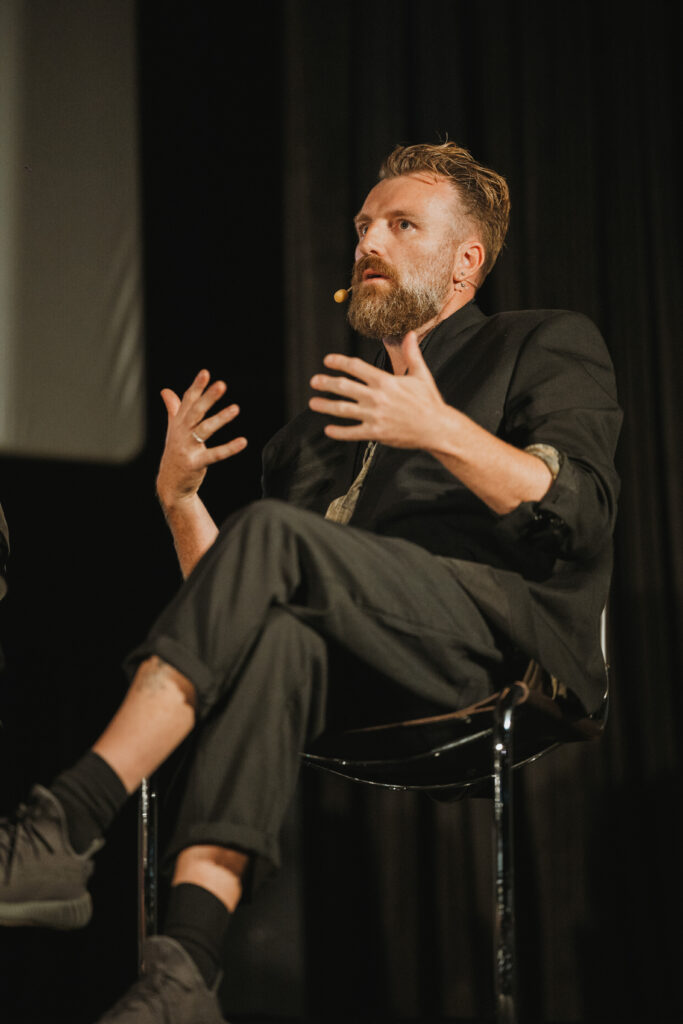
”Sound is kind of omnipresent in our world and more and more, I mean, when was the last time you went to a restaurant without a fucking soundtrack? Food, food needs a score, who knew?”
-Ben Frost
Ben Frost Look, I think that… Sound is kind of omnipresent in our world and more and more, I mean, when was the last time you went to a restaurant without a fucking soundtrack? Food, food needs a score, who knew? But it really is a thing now where we’re being bombarded with it at such a rate that I think it starts to lose meaning, you know, in a really profound way.
Ayla Jean Yackley And we almost don’t even hear it. No.
Ben Frost No, and I mean we’re at this point now where you’ve got a playlist playing in any restaurant, any venue, any space really. And it’s just there to kind of mask, to heighten a mood, to make conversation more difficult, to excite a space, to make us feel like we’re all part of something. And meanwhile, the system that kind of is responsible for that feeling and for that idea is designed with this inherent invisibility. It’s really the design aspects of sound technology, of broadcast technology. It really takes the same approach as military stealth technology. To that point, I’m speaking right now, but. You’re hearing me over there and over here through black boxes, which you’re not supposed to look at in spite of the fact they’re sitting right in front of you. They’re everywhere and we never think about them. And I think that that’s, you know, that’s a kind of a paradigm that’s been very clear to me over a 20 year career of performing and this kind of hidden economy of this sort of modular… A system of communication that exists in every city in the world. I can walk into any city on the planet and say I want this PA, I want these speakers in these dimensions and some guy with a truck will turn up and dump it on a doorstep from a warehouse where it’s spending most of its life and I’ll pay for that and that will sort of exist for moment and then it will disappear again. Meanwhile the kind of the the physicality of those objects carry with them a kind of a really interesting set of modular sort of sculptural possibilities, which I’ve sort of noticed over years of spending time in venues and watching things vibrate off tables and kind of playing with frequency and shapes and really being fascinated by the objects themselves, what they’re made of. It’s paper, it’s copper, it is cadmium, these are all materials with incredibly costly extracted processes at their heart that we never really have to think about. And even further than that, just in the art world in general. Most sound art, most art that deals in sound, is never asking you to question the locality of that sound or what it is that’s giving you that feeling of sound. The speakers are the classic gallery speakers. It comes in white instead of black and it’s in the corner. It’s behind a curtain. Hidden behind some beautifully curated wall with a didactic text on it with little holes poked in it so you don’t have to look at it.
Ayla Jean Yackley We’re supposed to ignore it.
Ben Frost You’re supposed to ignore it and so I guess my my kind of fascination is with then sort of flipping that narrative and saying okay this this is what is making that sound and this is where it comes from and this is what it’s doing and I would even sort of take that further into the the sort of paraphernalia that comes along with those systems the amplifiers, the wires, you know.
Ayla Jean Yackley Yeah, that we, people were almost tripping over, they weren’t really, but, and then on a sort of bed of felt, if I’m not mistaken, is how you put it.
Ben Frost Yeah, I mean, for me it’s mostly just about kind of framing in that instance and contrast, you know, because that floor is very dark, so I just wanted to kind of bring even more kind of attention to that idea. But yeah, and that doesn’t even get sort of started on the effect it is inevitably having on the building.
Ayla Jean Yackley Did that cost, did that occur to you? That’s probably, how old is the building? At least 100 years. Does that, those things, do the things like that occur to you or the material that it’s made out of? Do you question the impact that you’re leaving behind after the sound is off or?
Ben Frost Look, I mean, it’s not my first rodeo, kind of vibrating buildings. But yeah, I think that that’s always kind of a surprising element. And for me, that’s where the kind of the rubber hits the road, so to speak, in so far as when I have an idea about making a work that’s like step one. But then step two and three is now in this space. So now what does it do? And what is that conversation with that room and what does that say and what is that doing? The duality of these two spaces that the work occupies very much informs the way I approached it, which is to say it isn’t in one space, it’s in two spaces. Because of that, it has this inherent dualism. It becomes about whether you want it or not. It becomes about a relationship. It becomes two entities talking to one another across the space. And so that’s how I kind of approach it.
Ayla Jean Yackley Yeah, now I’m gonna go back again, which I was intending to do anyway and listen to it with that in mind, with you imagining the relationship with the building and of the impact. Thank you. So, José, I’d like to turn to you next. The work that we see in the Nearness show is called “What is Really Happening Here”, which is a wonderful name for a work in the show. And the relationship between the amphora on the ground and the canvas in front of us, you know, you’re propelled to ask, possible crime scene? Who shattered all these, you know. You have questions maybe when you walk in and you see the arrangement. I wonder if you could talk a little bit about that, about how you use these very distinct media and there’s so much in conversation or part of one another and yet so distinct that there seems to be risk involved in doing that as well. So maybe you could about that.
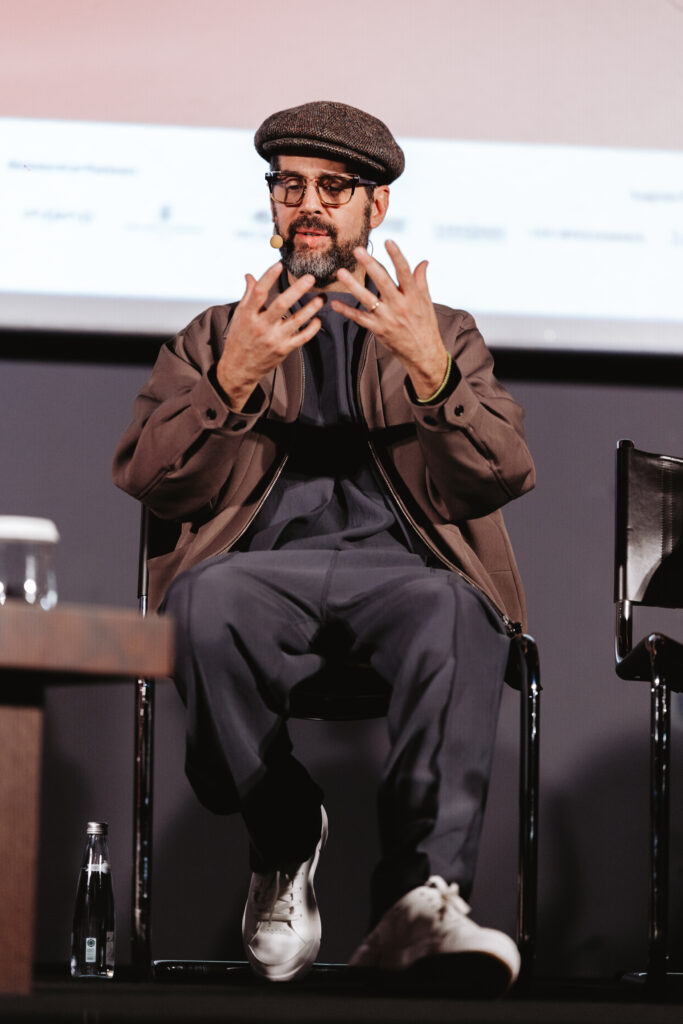
“The painting itself is a piece that is repeating the question in calligraphic layered form, like a palimpsest of writing. And it’s asking the question constantly, what is really happening here in layers.”
-José Parlá
José Parlá Just to give a little backdrop to this specific work and to some of its roots. The painting itself is a piece that is repeating the question in calligraphic layered form, like a palimpsest of writing. And it’s asking the question constantly, what is really happening here in layers. And that question first starts with what kind of writing is this? Is it Arabic, is it English, is it Hebrew, Japanese? It’s a universal language. So the viewers can maybe possibly think it’s their own language and maybe what’s written is what’s going through their mind at the moment. My intention is to ask that question and to blanket a kind of universality already. So the work, and that comes from a long history of me being interested in writing and gesture and calligraphy as an art form. And also the impact of cities that I’ve lived in, traveled to, and how that’s informed my form of painting and mark making. When I think about specifically a city like Istanbul or big cities around the world where you do see this kind of, you see the past and you see the ever-evolving present future, where we’re going, there’s this question of the shifting… Constant shifting landscape of reality. In 2019, I had an exhibition here in Istanbul that we did together, which was magnificent. We had a great experience, and it was titled ISTHMUS. ISTMHUS is an important word for Istanbul and for places like Istanbul. If you don’t know it, it’s a piece of land that connects two larger pieces of land divided by two bodies of water. And it’s the kind of bridge. All right, Panama is an isthmus. And Istanbul is in ISTHMUS. But I also loved it because of ISTHMUS, IST.FESTIVAL, Istanbul, right? The airport is IST and I found these like really localized connections. And I kept thinking about the texture of the city, the buildup of history and how we see a lot of ruins of. Empires and we’re here and you see that in places throughout the world and how that constant history is impacting us constantly no matter where we’re from and so a lot of my paintings besides the paintings that are calligraphic they involve these wall textures something that might remind you of like the Berlin Wall so there’s always this kind of like you know, political tension happening when you look at this painting or wall. As a reality, where was it? What inspired it? Who lived there?
Ayla Jean Yackley What’s it covering up?
José Parlá Yeah, what’s it covering up or what’s the message in it, right? Like, so that’s part of it. Then the ceramics, when we did the show ISTHMUS, we explored these Anatolian shapes of ceramic form with bright color inscribing. And I was really inspired in particular, like the calligraphy that you see. Here at Hagia Sophia and the big mosque. And throughout the city you’ll see this beautiful Arabic calligraphy. It’s like, almost like a song in written form. So, I wanted to do that in these ceramics. And I went to various museums and saw some of the world’s oldest Arabic ceramic collections here in Istanbul. So I went and really connected to some of those ceramics but also manuscripts that are ancient here. And I learned about… The stories of the calligraphers are really connected with calligraphy. First, to prove to each other how good they were and to prove to their masters of style how good they were, it was a really deep task. They would walk across the whole city barefoot, right? And Istanbul’s a really big city, but they would carry their scrolls full of writing, full of calligraphy, just to show up to the meeting with the masters where they all were waiting for, you know… The young disciple to make the presentation and you know they were all sitting there like what’s he’s gonna do you know and they’re like strung in the beard like this what’s going on and the young disciple would you know throw the scroll onto the floor and say my name is Mohammed al-Baktum you know, and then poof like a magic trick all the calligraphy was sprawling scrolls. Then they would all go, ahhhhhh, and it was like a debate, you know. Style and form and all of this was like something that for me was just super fascinating and I wanted to bring that to the project, the ISTHMUS project, but here this is this condensed kind of small piece this painting is questioning this history what is it what’s this reality then the fractured ceramic it’s no longer colorful it’s not meant to be beautiful it’s more like excavation, the happiness, archeological… You know, broken pieces of the past, asking again, the question and like maybe, you know, was this intentional, did this happen by mistake? Was it found?
Ayla Jean Yackley Was it tragic? Was it..
José Parlá Is it old? Is it new? You know, it’s just really open to interpretation and I like this condensed feeling of that versus like a big exhibition that we had already.
Ayla Jean Yackley Yeah. Thank you, José. And Lal, now turning to you. The work that we see on the top floor of the main building is really quite stunning. I mean, just in scale, you walk in and it looks like, from the bottom, as you’re approaching through the stairs, it could be like an altarpiece, but then you get closer and there’s something much, something quite dark going on as well. And I know that, you know, that social media… Is a major source for a lot of the ideas that you’re looking at. And when I got closer, I approached it, I realized that these figures were wearing…
Lal Batman Masks. Masks. And.. We were chatting right before we got up here and you said, yeah, that’s social media again. It’s the filter effect. It was one way you described it. So if you wouldn’t mind talking maybe specifically about the work, what went into it and why you decided to use and depict those figures the way you did. And there’s a lot going on in that work too. It’s not just 21st century characters. On that altarpiece, but it does refer, it reaches much further back into time. And I’d love for you to talk a little bit more in detail about that.
Lal Batman Okay, the thing is; I’m seeing my production process as a playground, so I like to try different kinds of mediums, eras, and I also like to travel super often, so it’s very inspiring to see different kind of cultural backgrounds, and playing everything. So like in that composition you are able to see the different kinds of eras like Victorian, Baroque, and 21st century icons. I’m combining everything and deforming the body or textile or…
Ayla Jean Yackley Mm-hmm.
Lal Batman Holistic icons even, and out of that I’m creating my own worlds, so yeah.
Ayla Jean Yackley And the historical references, it’s not a clear, linear straight, it is not, you know, the Victorian and then suddenly we’re in the 21st century. But you also mentioned that there are Ottoman sort of figures in there as well. So it traverses geography and whatnot. How long have you been looking at social media?
Lal Batman Since I know myself, we’ve grown up, social media and I mean those masks for example directly refers to the 21st century but those masks belong to Mexico or Egypt, I mean it’s really nice to see that dialog from the past and the present. So, yeah.
Ayla Jean Yackley And also that these parallel universes can coexist at the same time. I mean, one thing that I was thinking about was that when you encounter in social media these different identities, whether people are using filters, whether people only put in their best face forward. I think one of the messages that we get from your work is that identity isn’t a concrete fixed object and that it can shift. Do you see power in that or does that sort of make, going back to the very basic notion of what is really real, so when you look at social media and you see that reality is being so packaged and provided to maximize I guess likes or whatever, it’s that, do you feel like that somehow takes away from it or is that our reality, is that what we live with?
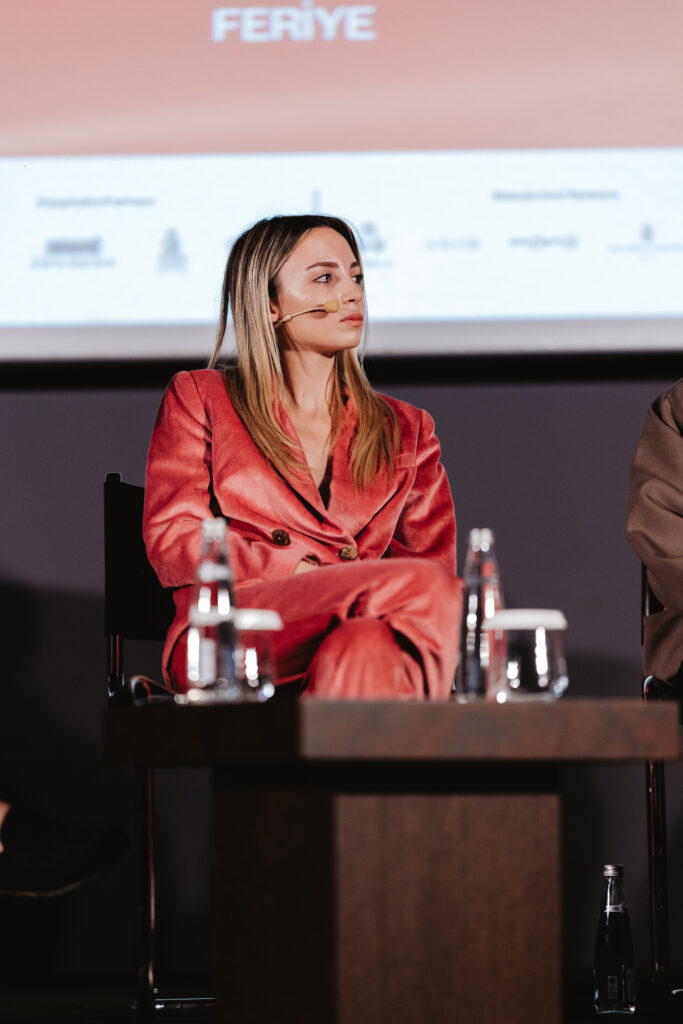
”I don’t believe in reality. I think we all live in the illusion, so that’s why I’m playing with those concepts. In social media, I think, we regret that we’re having a mask, but at the end, I thing we all have masks, and now we can able to change whenever we want.”
-Lal Batman
Lal Batman I mean, from my personal perspective, I don’t believe in reality. I think we all live in an illusion, so that’s why I’m playing with those concepts. In social media, I think, we regret that we’re wearing a mask, but in the end, I think we all have masks, and now we are able to change whenever we want. It’s super easy to filter or deform our bodies by Photoshop. Everyone regrets it, but … In the end, this is our own reality, but what is the reality there? I don’t know. I think everything is illusory in this century.
Ayla Jean Yackley Wow.
Lal Batman So this is my perspective.
Ayla Jean Yackley That is a very, very powerful idea. Do you think it happened in this century? Is that part of what you’re saying? Is it something very particular this age or is it something that we’ve only come to realize in this age?
Lal Batman Yeah, I think it was always like that. OK, yeah, in my opinion.
Ayla Jean Yackley Okay. You know, one thing that we should all talk about if we have time, and I think we do have a few minutes, do we? Okay. But I’m myself uncertain about how to approach it. I was thinking about it when Ben was talking about the soundtrack to food, the scoring around food, and how there’s the constant presence now of sound. Would you want to tackle the issue of artificial intelligence, AI music?
Ayla Jean Yackley Not art. It’s a big topic, but no, specifically about sound and how it’s probably more and more restaurants, for instance, are going to rely on Spotify’s AI-generated sound. I think that’s a … If that’s not already happening, it could very well …
Ben Frost 100% happening.
Ayla Jean Yackley It’s already happening, isn’t it?
Ben Frost Jose and I, we were continuing our debate just before we came up here, but it’s, yeah, I mean, look, I hate to be the pessimistic voice in this, honestly, I really do, I am a musician, this is what I’ve done my whole life. But I think we’re kidding ourselves if we take this position. Adhering to the digital platforms and allowing that to be the conduit through which every oral experience is dictated to us is a form of resistance. It’s not. It is just simply not. It’s caving. Yeah, I think the raging against the dying of the light is to disconnect from that and in a very pragmatic way, I think it really is coming back down to the living room. It’s gonna come back down, to the tiny little club with the 20 people. It’s going to come down to the person learning to play the cello. Because when we’re all standing in the ruins, and AI’s decided to erase every hard drive on earth, where is the fucking music there? Like, it’s not on Spotify anymore. So I think this kind of return to the physical reality is like, that’s the thing. And yeah, it’s a frightening prospect, but I think acknowledging that that’s where we are is the first step.
José Parlá In publishing it on vinyl is better than…
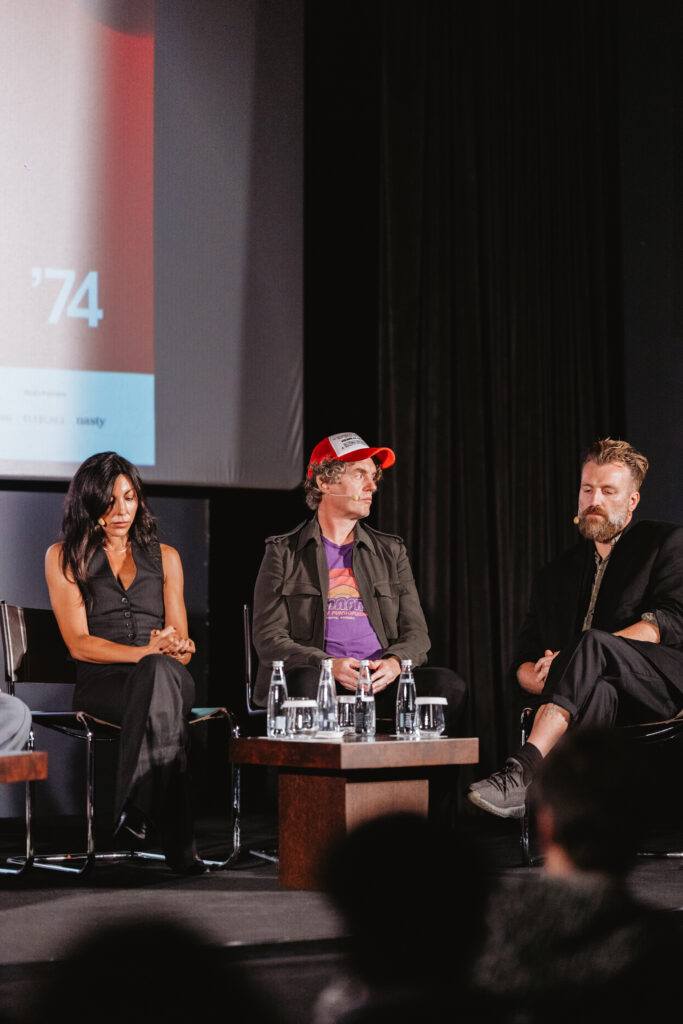
Ben Frost Yeah, but where does the vinyl come from? I mean, that’s just oil in another form. So, you know, I think it really comes down to community. And we were talking before about, you know, my experience of being in your home country and just seeing the kind of inadvertent kind of resistance that’s going there as a result of being technologically kind of neutered. By the state.
José Parlá There’s a technologically-noded country, we’re talking about Cuba, but at the same time, music is so embedded in our culture for so many, you know, centuries. And under an oppressed state, it’s all that there is left, in a sense, for self-expression, for building community, even for something like exercise and dancing. There’s not many forms of recording left or exposing it to the world. It’s like a necessity there is different than in a developed place like New York or Europe or here in Istanbul.
Ayla Jean Yackley Mm-hmm.
José Parlá So it’s hard to say that the answer, like what happens in Cuba, is like the universal answer. But it is a great idea that there’s more musicians, more communal experiences, 100%.
Ben Frost I would make the argument that Cuba is a vision of our future, not our future being a vision of Cuba.
José Parlá I mean, if Cuba is the vision of our future, then we’re all kind of looking at it like a kind of Armageddon. The hospitals are non-functional.
Ben Frost I’m just talking on a cultural level, but, yeah.
José Parlá Yeah, yeah.
Ben Frost I get what you’re saying.
José Parlá Culture is also coming from this other landscape that feeds the culture. So a lot of art comes from suffering. And a lot of other Cuban energy of music and this kind of resistance comes from this necessity to survive. And that’s why I was thinking, it’s the difficult conversation we bring up in Cuba because I do encounter a lot of people who say to me, I just got back from Cuba, what a great trip. Fantastic, it was so beautiful. I was at the beach, and it’s complicated for us because you go there for one week or two weeks, great, living there, you can’t even, it’s a nightmare. So it’s not a solution, not that capitalism is, not the U.S.
Ayla Jean Yackley Ben was saying that that’s why maybe music and it’s so essential there and that’s what makes it so
José Parlá 100% you hear the music.
Ayla Jean Yackley There’s a purity to it.
José Parlá Yeah, you can follow it to someone’s house, walk right in and they’ll welcome you and you can just have fun and dance with people. It’s the most beautiful thing.
Ayla Jean Yackley And that is so real.
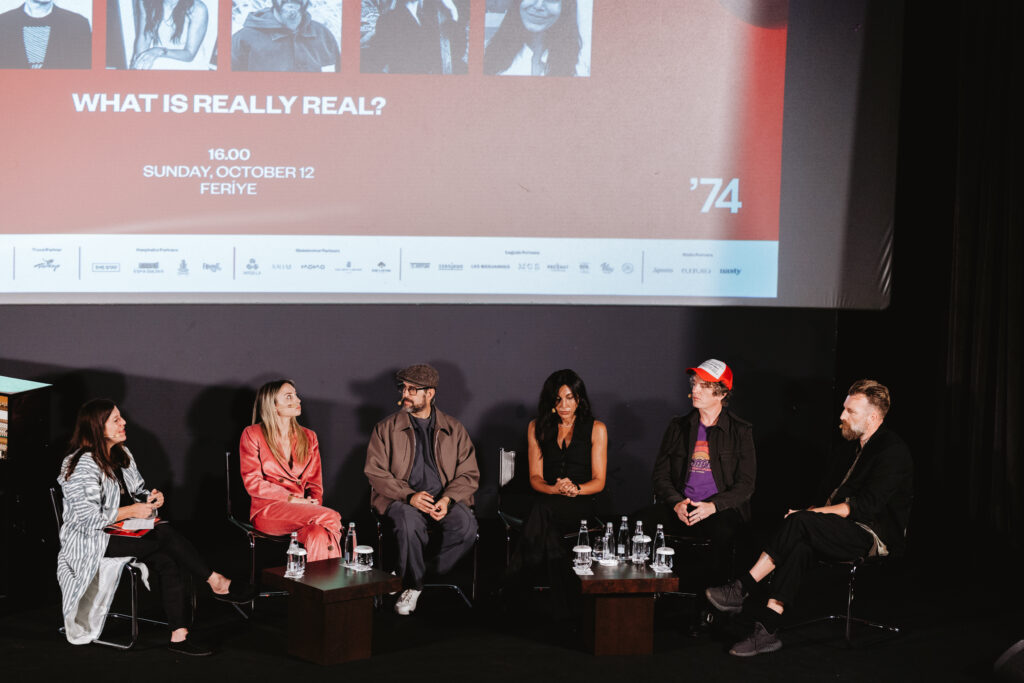
Ayla Jean Yackley That is really real. So we only have a couple of minutes left, and I think we’ll do a very quick lightning round with Lal, Sheree and Jonah about putting forth the big question of the day. And Lal, you kind of answered it, I think, in the last part. So you can be excused from this lightning round if you want, but the question is what is really real and how. What do you see? If you don’t believe in reality, everything feels like an illusion, what is really real for you?
Lal Batman Soul our soul. That’s it.
Ayla Jean Yackley Lovely, lovely. Sheree, what do you say?
Sheree Hovsepian Well, I wanted to just throw in another question perhaps that might bounce off of what you guys were talking about. But we’ve been seeing, you know, digital versus real in regards to visual art for a long time. Like visual art, you know, is online, but people still go to museums to experience the real. But to answer the question about what is really real, I think the only thing that we can really count on to be real is change.
Ayla Jean Yackley The only thing that you know is going to happen is that it’s going to be different.
Jonah Freeman I tend to agree that I think where it’s all an illusion, but what I’ll say is that I think that the issue in this question of what is real is we all have our own reality that we experience, but it’s the shared reality where the problem is now. And I think that that us living in these mediated worlds increasingly is sort of preventing us from having a real shared reality. And I think that… When you’re asking what is really real, I think this is really as real as we can get. I think the IST.FESTIVAL is really really real and I think it’s the idea of being in a room listening to someone play music is really. Going to a museum and being confronted with the material of art is really real and yes, it’s all an illusion for sure. But I think a lot of the problems have to do with us not being able to share reality in the same way that we’ve been.
Ayla Jean Yackley And all of those examples are shared experiences and shared reality. And that returns us to our basic faith that we can witness and feel roughly the same thing in watching the same event or seeing the same art.
José Parlá If I could share one more analogy, the illusion, of course, lives in our mind. But there’s one thing that we always forget about that we share, we’re sharing it right now. It’s breathing, it’s oxygen.
José Parlá That’s very real.
Ayla Jean Yackley We’re alive. Yeah, beautiful. Do you want to say something, Ben? And then I’m going to make kind of an awkward segway to something else that’s really real and do a little plug for the newspaper that I write for, The Financial Times. I hope you’ve had a chance to maybe go online and look at it. This weekend coincides with our launch of something. It’s the Istanbul Globetrotter series. So you can have a look at that during your time that you’re still in Istanbul. We’d be so pleased if you would go. You can find it at, ft.com, slash globetrotters slash Istanbul. And it’s a brand new guide. It came out this weekend and it’s been, the editors are here in the audience, Rebecca, Niki. And the stories have been written by, I contributed one, and by other really brilliant colleagues who know and love Istanbul. So that’s something I’d like to leave you all with. Thank you all so very much. This was really, really nice for me to get to know your work a little bit over the last few days and to hear from you. It’s a real privilege for me. So thanks again. Thank you. Thank you. Thank you.
Sedef Avcı Do you have any questions for them?
Timothée Verrecchia Hi, thank you. I have a question for Demet and Alphan, actually. I’m sorry, I’m hijacking this thing. You guys have asked all of us what is really real. I’d love to hear your answers.
Audience Yeah.
Demet Müftüoğlu Eşeli My answer was this exhibition. I thought a lot about what is really real. And Alphan writes an amazing theme. And I was questioning it a hundred times. And then I said, the only reality for me is friendship. And I love where we moved our gallery space. And I just wanted to share my love with everybody and with the artists who are involved in it. That’s my reality.
Alphan Eşeli I mean, in terms of us, we humans, I totally agree emotions are real, but I also think there is a reality that’s out there. And we as humans are not capable of, there’s an objective reality that exists, and we are not designed, we’re not capable of perceiving it that way because we are emotion-driven. We hear our backgrounds, the way we grew up, our surroundings, the landscape, even the weather effects, and how we perceive it. And maybe, maybe, I don’t know, in the future, maybe AI computers are gonna be the tool that’s gonna capture that objective reality, which we are not designed to be able to capture, honestly. But for us, it is our emotions. We have our own subjective realities. That’s what I think.
Sedef Avcı Thank you. Thank you! Thank you and with that, we conclude the panel program on the 15th anniversary edition of the Istanbul International Arts and Culture Festival. Thank you for joining us.