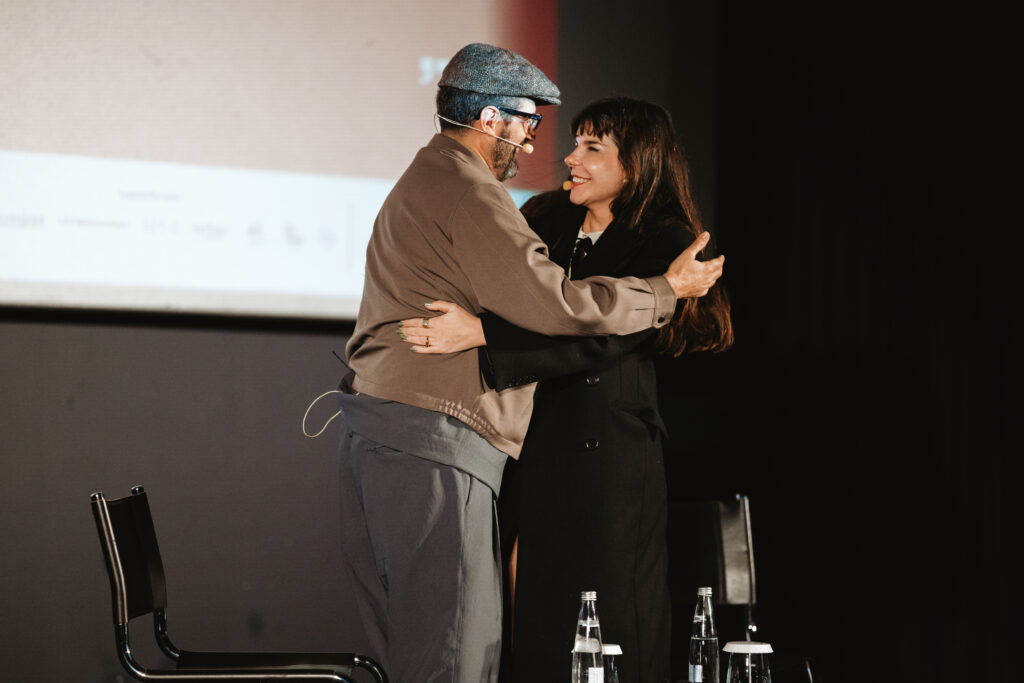
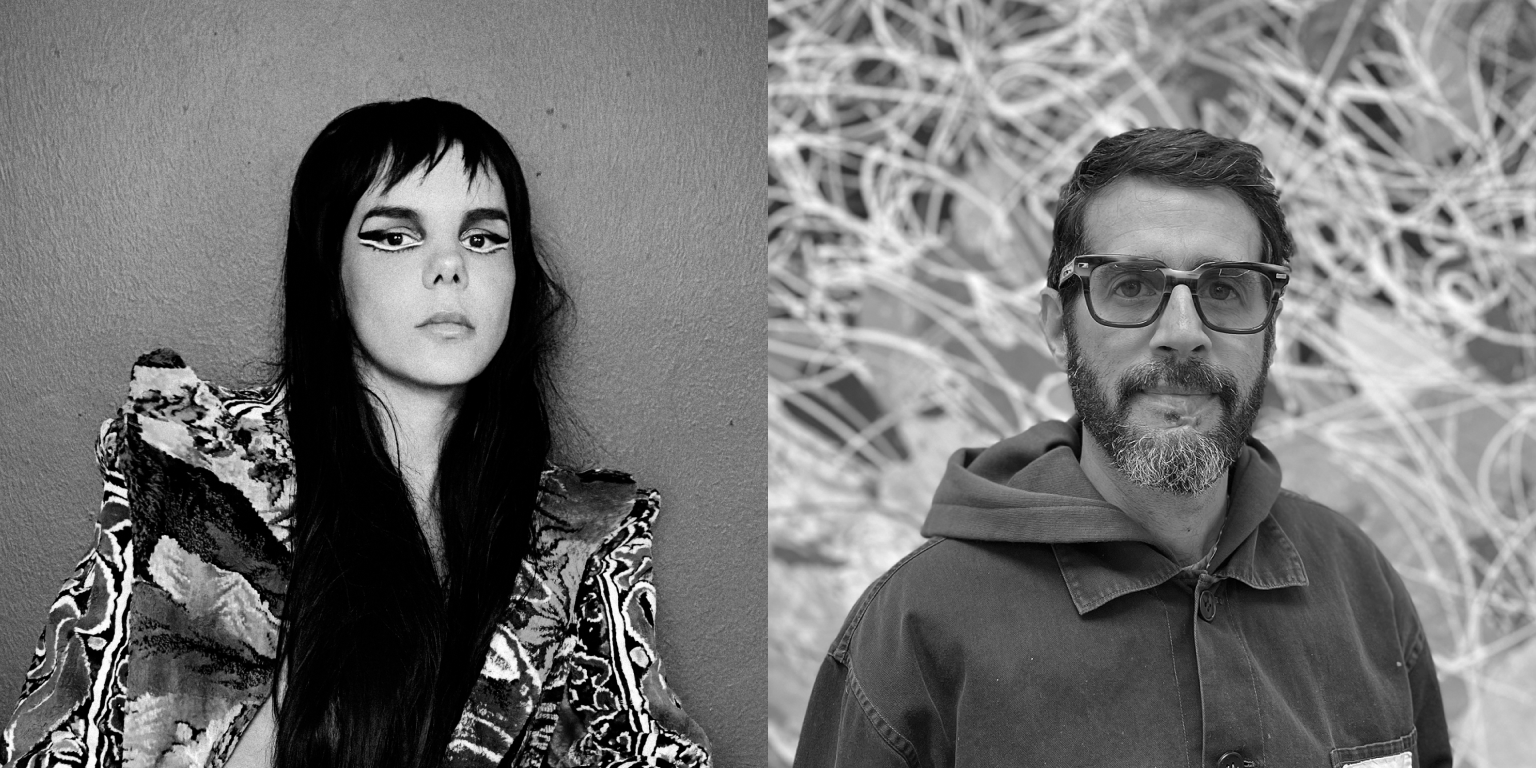
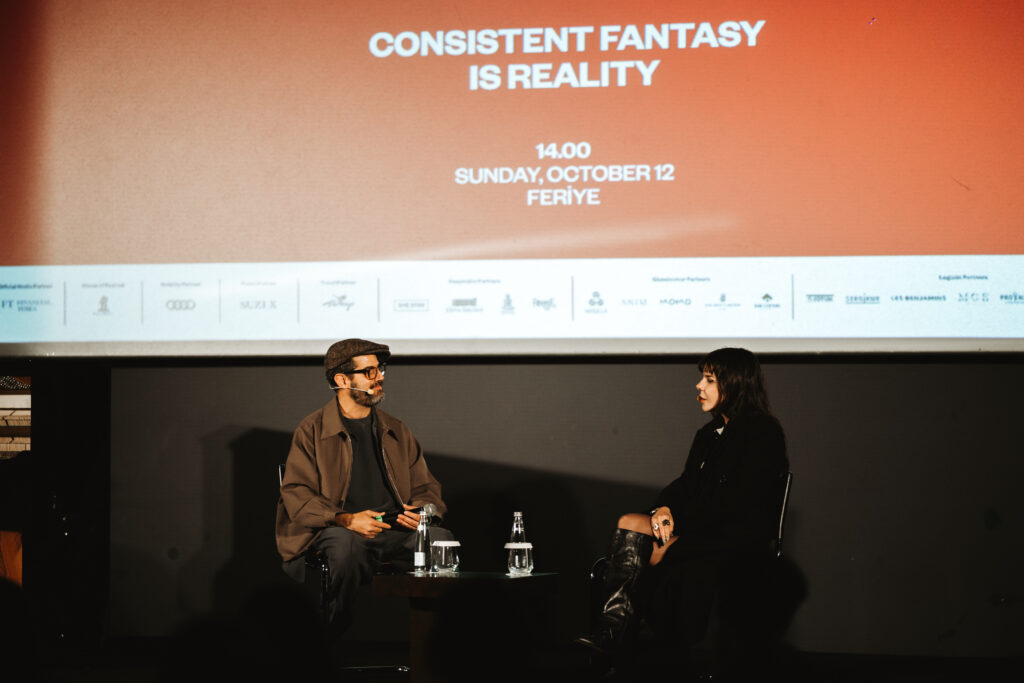
Later on the second day of the 15th Anniversary Edition of the Istanbul International Arts & Culture Festival — IST.FESTIVAL— Gaye Su Akyol came together with José Parlá for a conversation titled Consistent Fantasy is Reality. They explored how personal myth-making, aesthetic worlds, and imagination generate alternative truths, reflecting on consistent dreaming as a way of engaging with reality. Their dialogue questioned how fantasy can become a form of authenticity in a world where the real often feels constructed or scripted.
José Parlá Hello everybody. Well, it’s really nice to see all of you here. Thank you for coming. And thank you to Alphan and Demet for organizing this. It’s such a pleasure to be sitting here with you.
Gaye Su Akyol My pleasure, thank you, and thank you guys for making this dream come true.
José Parlá What can I say? When I first heard your music, I was blown away. The opportunity to sit here and speak with you, I thought, let me get really deep into it. And how I got really into her music was while I was working here in the studio in Istanbul, I’m blasting the music at full volume. I was painting, I was working on ceramics, and really, it just transported me. One of the connections that I first had to Anatolian music, Anatolian Rock, was a really important artist and singer from Turkey named Selda. How do you pronounce her last name?
Gaye Su Akyol Selda is right. Selda Bağcan.
José Parlá And, you know, her song, “Yaz Gazeteci Yaz” is a very important song that I think many people from Turkey recognize and understand. And it’s powerful, her voice is powerful, the energy there, really I feel like when I heard your music, it really connected me to this deep history. And as we were speaking earlier, it’s like this 4,000-year-old melting pot of this place that is the bridge, is the Isthmus. Of the world where you have, you know, the many empires, right? The Roman Empire, Constantinople at the time.
Gaye Su Akyol The Byzantium.
José Parlá The Byzantine. You had the Ottoman Empire, the mixing of cultures. And that is very evident in your music. So I would like to, you know, please tell us for some of those who’ve never heard your music, a little bit about you, your background, the information that is then brought into all instrumentation, the voices, the lyrics. Talk to us about your process and a little bit about your history.
Gaye Su Akyol I was born in Istanbul and I was raised here and the street sound that I faced in my early ages was really kind of a part of different cultures because you know in Istanbul when I was like five years old it was the era of like arabesque music comes to a very distinctive version in Islam, you know, the people from Eastern just moving to Istanbul. So when I look at my music, I can say that, as you just mentioned, this is a very old culture with more than maybe four thousand years of different people, empires, cultures, Ionia, Persians. You know, this is like the layers of different music, people. And you can hear in my music because I try to look at my culture from a perspective, and I try to make the music I really want to listen to. For years, because of the political environment in Turkey, unfortunately, people were afraid of their own cultures. That’s so sad. And this is the saddest side effects of the military coups in the world too.
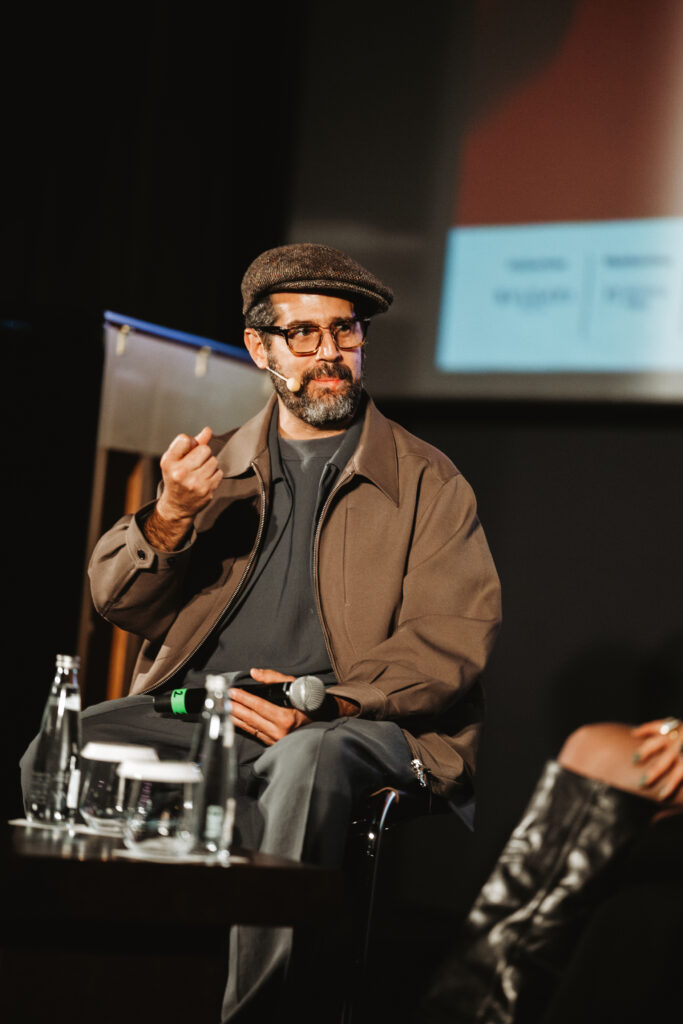
José Parlá Well, this forces us to see perspectives in a different way constantly. And we’re being bombarded by so much propaganda, so much news, shifting landscapes. We think about history from our educational perspective, but we’re also being educated constantly by what might be truth or post-truth. We’re trying to figure it out as artists, and that’s why I think it’s very important that you’re going deep into this route, into this kind of geographic and dynamic that is who you are, talking to the people of where you are from. But also, for me, I do see… Music tends to capture a universal energy, as well as an understanding. Like, I don’t have to understand a Japanese singer for me to get into the vibe and even the energy. When I first heard Selda, I didn’t understand the words, but I knew she was a badass, and she was confrontational, and that she probably had a massive following of people going, you know, we’re going to change the world. And that’s what I believe in. When I hear your music, I see the movement of the calligraphy that you see in the Hagia Sophia and the ancient masters. And you see all that sweat, hard work, the wars. Now we’re seeing this shifting political landscape very close by; the wars in Russia and Ukraine are right next to us, right? We’ve been seeing what’s happening in the Levant area for years. This is nothing new. The United States has been selling, the West has been telling democracy, picturing, painting this thing like it’s real, it’s never been real, in my opinion. Now it’s evident that it’s falling apart. It’s changing. And so what, as a musician, inspires you? Do you feel that music or art has more power now, or less? Is it going to change the landscape, inspire minds?
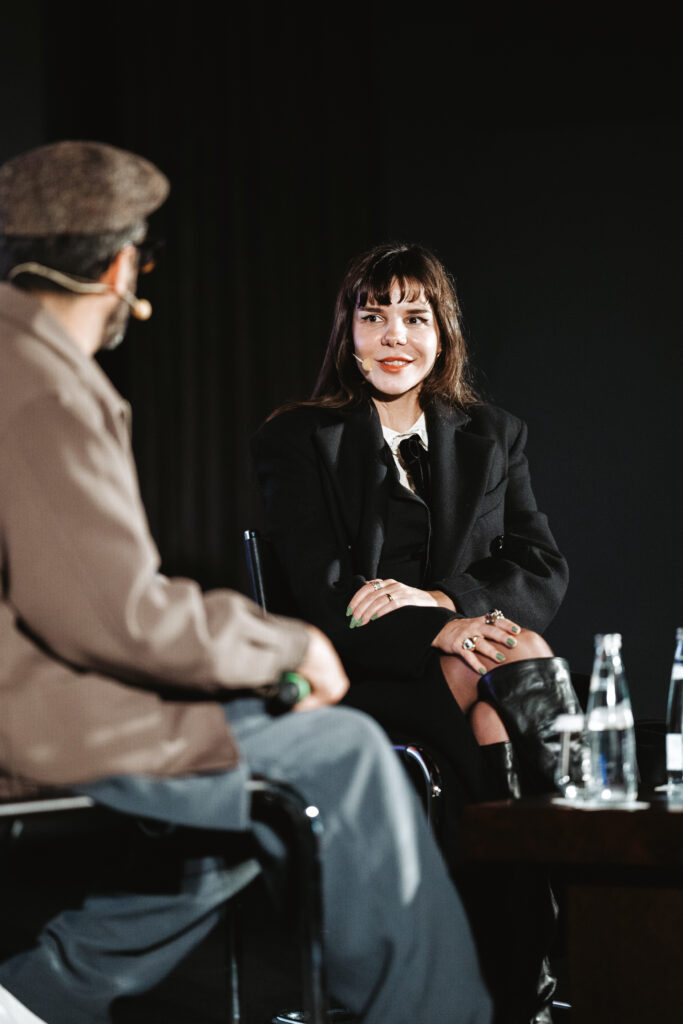
”So the question should maybe be, what is real? Yes—but how can we change the real for our better good, for the better good of ourselves? I always say that imagination is the biggest thing we can rely on, and we can come together by imagining a better version of this beautiful, beautiful world.”
-Gaye Su Akyol
Gaye Su Akyol Not just music, but art is the biggest and the most efficient weapon against that fascist regimes and these dictatorships, I think. That’s why they are afraid. That’s what they try to erase you and your history from the books and everything, but we can see that like artists, the people who are like literally writing the right history of their ages. Yes. So if we would have the chance to record musics, for example, like 1,000 years ago, maybe, and of course if we could have the chance to take away that power from the biggest empires that people can literally make their own musics at homes without borders and everything then we could maybe hear the real history because history is also written by men, white men. And what we know as history is probably bullshit. Oh, so what’s your point? This country has had multiple coups, like military coups and all of these coups erased the real cultural layers of our people. Because people are really afraid of accepting themselves. This is not just a war against people, but against the non-living people right now. It’s about, again, history. So I think, yes, the question’s answer is we can change it by making art because people tend to come together. Around an idea, around the music, and I always say that evil is super connected to each other and right now we can see that it’s weird but they are more connected than ever, like the rich guys are coming together with the dictators, they are sponsoring the other guys, and we see a shit show right now. So the people who sell democracy, all around the world, is now trying to make something real by using their powers. So the question should be maybe “What is real?”, yes, but how can we change the real in our better good, for the better good of ourselves. So I always say that imagination is the biggest thing we can rely on and we can come together by… imagining a better version of this beautiful, beautiful world.
José Parlá So art is the front lines of resistance. And now very familiar with the topic of a dictatorship. My family’s from Cuba. We’ve experienced a 67-year-old dictatorship. Before that, we had many coups as well. And we haven’t seen change. But to argue about the selling of democracy from the Western standpoint, we are Cuba in the Western hemisphere as well, but they sold us something different than democracy. There are all those communist socialist ideologies, which was also a big lie for us. And at the beginning, everybody fell in love with this ideology and Che Guevara and Fidel. They assassinated many people. So what they’re selling, whether it’s this or that. If there’s no real truth for the progress of the people, of the progress, then really the ideology doesn’t matter whether it’s on the capitalist or communist side. It’s really when leaders don’t listen to the people. Which, the artists are the people, and the artists they’re kind of shaping, molding, creating the ideas of how the public will see. Yeah. Then art becomes the sort of… negotiating table for what can be better, because we’re looking for better so that it can be, in a sense, a better reality. And it’s interesting, because in the earlier talk, I found it so fascinating when you asked, does reality matter? And I thought, wow. And I really want to talk about some of the concepts in your music when you are talking specifically about the Anatolian dragon. I see you as the Anatolian dragon, right? Was that your intent in the title of this album? Basically, so it’s a dragon that comes out of a city that is completely destroyed. And I thought about the analogy of the phoenix rising from the ashes. In my part of the world, we saw this happening in the 1970s and 80s in New York, where the Bronx was on fire. And, um… There were political lines drawn around neighborhoods where Black and Latino people were not allowed to have loans for properties. And so they were pushed out and kind of on the edge, on the fringes of society. So that created one reality, versus the reality of the town, let’s say, in the Upper East Side, where everything is different. And there was an interesting film I wanna mention called “80 Blocks from Tiffany’s”. It’s 80 blocks from Tiffany, the diamond shop. 80 blocks towards the Bronx, where it focuses on the gangs and the turbulent crime, and that energy. So there’s this split reality, all right. And I wanna talk about how in that energy coming out of like the punk scene in New York, perhaps in London, and versus the disco scene or the hip hop scene, what are those influences reaching Turkey, reaching you, and how that energy starts to translate into your music?
Gaye Su Akyol Anatolian Dragon, as we called “Anadolu Ejderi”, is my latest album, which I released three years ago. I used that analogy, that metaphor, to describe the raw power inside all of us, actually. It’s sleeping, it’s mythological, it was always there. Maybe you can say it’s not real because it’s mythological, but myths are as real as… the reality we are living in, then we can say what is real again. So this was the role of power I was calling to wake up for changing what we are living right now in Turkey, in the world. So, you know, as we just mentioned, like democracy is now collapsing in a way because they sold us for years, but now they are facing the ugly part of it, because if something maybe can be sold or can be bought by people, then we should ask about this, “Hey, is it real too?” So I think we are facing the changes of reality right now in the face. So this is the biggest change of all time that we can see in our lifetime, maybe. So AI is coming, which I love very much. At least it’s now sneaking into the lives of us, but I think it will be a tool for everybody in a sense. But Anatolian Dragon was maybe the last album I did without AI. Like coming to your question, in Turkey, there are most of the people now living is having different problems about the politics, about economics, about art, about free speech. So I think the most weird part is the evil we can call is so equipped by the sense of doing everything with power. We believe that we cannot change it by coming together. That’s the thing they just made us believe. So Anatolian Dragon album was a call for changing it by coming together, by moving together, by believing something that we consistently dream together. So I think what we need right now is just like… The power of the world do it, we can come together and change it just by weaving our own reality, because we don’t have the courage yet. And my art is always reshaping the idea of reality, because it’s weird that we are living in a world with different dualities, different perspectives. Even one mind inside of our brains can change their own realities. In different periods, so perception is also the key word here and this album was telling about exactly this.
José Parlá What I really wonder also is, are we really mythological? I mean, you’re standing right in front of me. You are the Anatolian Dragon in my perception. When I hear the music, you are roaring. You’re bringing all this energy, 4,000 years. When people listen to it now or in the future, even after we are gone, even after my art remains and I’m gone, the way we even look at the past and we see the ruins of Rome. Was that mythology, was that real? There’s the proof. So what we are doing, this reaction to our environment, to me, it’s not mythology anymore. We are at the front lines and we are making this an important factor of resistance. And with that, I wanna reach back to something we were talking about, about dreaming, the consistent dream, and that without the dreams, we don’t have this balance. And it’s also like. You can dream awake mostly, right? And create while dreaming. Can we talk about this idea that you were telling me about, consistent dreaming? And what are your thoughts behind this?
Gaye Su Akyol “Consistent Fantasies Reality” is the name of my third album; “İstikrarlı Hayal Hakikattir”. This name came up from a big loss and a trauma in my life. Ten years ago, I lost my mother, and she was my best friend, and it was a very quick and unexpected time. So, after that, one day, when I was thinking about losing her, she’s not here, but now I feel what she would do when I say this and what she will laugh at when I do that. So, it was like a brainstorming, of course. So, I thought that, okay, the only thing that is different from her existence is her body. But except for that, everything I know about her, all the memories, all the beautiful moments, all the anger and worst moments of our lives together were there. So my brain leads us, leads me to the idea that consistent dreaming is the reality. So after that, like I’m so into, by the way, quantum physics too. So, you know what, it’s very weird. When you look at quantum physics, reality totally changes. The molecules, the atoms, they’re acting totally different from what we know here. So this is maybe one of the biggest inventions of all time, that reality differs from here to the microcosmos and micro-reality of the quantum field. So, I realized that the reality we are living in is also an illusion. This is weird, because this was like a moment of euphoria or kind of a, you know, I don’t remember the exact word for it in English, but it was something I felt with all my cells. This is power. This is what I call consistent fantasy is reality. So like being here with all you guys, breathing, talking about reality, trying to be yourself in that weird world. This is crazy.
José Parlá It’s completely abstract.
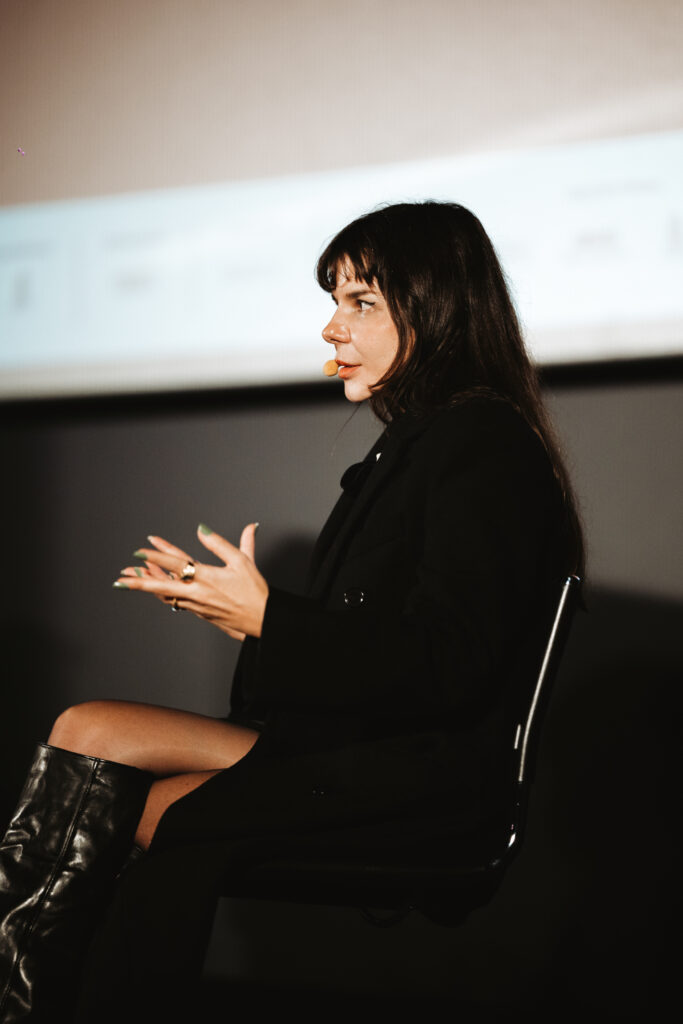
Gaye Su Akyol Yeah, it’s surreal. If you can look a little zooming out from here, you see that this is also super unreal. What we call real is consistency. You wake up, you see your hands, it’s not changed from yesterday to today. So you say, “Okay, this is my hand.” But one day if you wake up and you see a totally different, maybe you become a bug, like the thing that we know from the book. So you can totally say, “Okay, now the reality has changed.” But I think this is a little illusion that you can call the computer game we are into, the simulation we are into is tricking us to remember that or to accept that this is real. So… yeah.
José Parlá I mean, I was really touched when I was speaking with you and this term came up of consistent dreaming. Made me feel personally connected to this conversation. Some of you may know this, but some of you might not know that in 2021, I was severely sick with COVID-19, and I was in a coma because of it for four months. I had a stroke, and I nearly died. It’s by miracle that I’m sitting here speaking with you about dreams. When I woke up from the coma, I nearly killed myself because my reaction was to take out the tubes, and it was an emergency. They put me back under. A week later, I woke up again. Now I’m tied to the bed. And my reality was, I’m in JFK. I just landed at the airport. My doctor is the pilot. My nurse is the stewardess. I’m on an airplane. I’ve just landed in New York from Australia. I am convinced of that. And I remained convinced of this for weeks in the hospital. I remained convinced that I was a hotel owner, that I had hotels in Hong Kong, Australia, Japan, Havana, Miami, New York, and I was the business guy with my brother. And that the mafia was after us to steal our business and assassinate us. And we had just escaped the triads from Hong Kong to Seoul, Seoul to Tokyo, and friends along the way had helped me. The doctors told my brother, ‘’Don’t reveal to José that reality is not what’s believable. This is his reality. We need to work with him.” Okay, when you’re in a coma for four months, and in this very experimental phase of what happened with COVID-19, that we’re using AI to monitor my heartbeat, to administer the painkillers that made me hallucinate, possibly cause dreams, there’s no way to know. So, this reality was my reality, I was so convinced. And actually, as they worked over a period of one month, two months, and I started to see photographs of my life, me as a child, with my brother, with my dog, with my parents, my life as an artist, and I started to see this other version that I didn’t remember, versus my hotel reality. I start to feel the heartbreak. Who’s that person? I’m losing this person, and I start crying, and it was very emotional. And then my brother had the brilliant idea to bring me my little record player and bring the music. So it brings me back to this conversation about the power of music. Playing music, seeing photographs… The music automatically started bringing memories that even the photographs couldn’t bring. It really took me back to my parents and stories about my grandparents. And then it was very emotional. By the way, I couldn’t walk, I couldn’t swallow, I couldn’t even drink water. So the physical process, it really connects me to you, you’re mentioning the consistency of waking up and seeing your hands. But for me, when I finally woke up a month after waking up and seeing my body, I was a different José. I was 60 pounds lighter. So that’s 30 kilos. I look different, my beard, I look like… Fidel Castro! I didn’t recognize myself. My reality had shifted, the world’s reality had shifted, people would come to visit at the hospital; only family and they were wearing full suits and hazard suits. I couldn’t see their faces. I didn’t know what my doctor looked like for a year after, because of the mask. So my shifting reality was a very physical one, but this dream kept showing up. Even now, I have dreams of the hotels. And you know, if you guys are in the hotel business, let’s talk because we can have a lot of ideas. But yeah, I want to expand on this, you know, sort of diverse realities and an inspiration that comes from dreaming and consistency versus the, you know, the fractured dream, because sometimes we dream and then the system stops the dream. It could be a political system, it could be a health crisis, it could be an economic crisis. So how do we persist? How do we continue?
Gaye Su Akyol That story is so harsh and so big. You know, years ago, I had some lucid dreams for days and months, and I studied that. I mean, I worked on having lucid dreaming. You guys maybe know what lucid-dreaming is. It’s like knowing that you are in a dream while dreaming, and I just searched for the details, the tactics, and how to make it. And then I started doing. And it was so weird, but so beautiful, because I literally had another life there. Like, I was drinking coffee, I was talking with the people I wanna talk, I was just having fun with things, I was always flying. So one day, after months, I started to wake up very, not sleeping all day, kind of, super tired. And I read about that, and it was saying, okay, someday you cannot undo being a lucid dreamer. So this was horrible for me because lucid dreaming is something that doesn’t let your subconscious forget or let go of the heavy burden of being existent. So I was waking up super tired, and I was trying to forget about making lucid dreaming, and some day I, I mean my subconscious thanks to the power of whatever I I forgot to lucid dream, but my point is this so I was having a life over there like really, I mean if I could or I would do that for years. Maybe I would marry there have kids, you know, like I don’t know. Whatever.
José Parlá How do you feel about that? Another husband.
Gaye Su Akyol Maybe not. Maybe I would marry again with you.
José Parlá It has to be you. We’ll find an agreement.
Gaye Su Akyol Okay, we will talk about that later. We have an issue now. So, this is weird because, you know, the only difference between this life now we are facing was high. So it was like, it was called a dream. That’s all. And by the way, people normally like to sleep eight hours, nine hours, which is kind of half of the day, you can say. So another half of today was consistently lived by purpose, I mean on purpose, and I was having another reality there. So this is also another thing for me to understand. Reality is so connected with consistency.
José Parlá Did it help you bring all the lucid dreaming into your work as a substance for the real resistance that you’re living as an artist? I mean, your work has been controversial. It has sparked some interest internationally. It’s been spoken about something that made maybe some words that maybe made people look at you in a certain way, like a rebel. Tell me about that, tell me about how you found this connection from the lucid dreams and the realities, how it ends up in your music, as music being a movement for you.
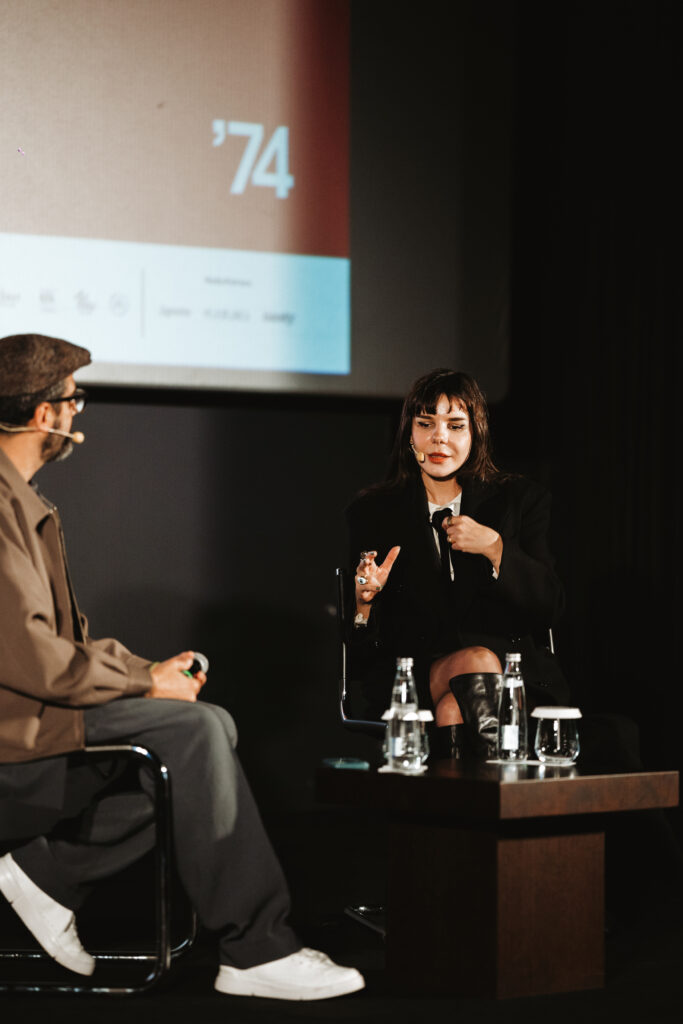
Gaye Su Akyol When you look at my songs, my lyrics, it’s obvious that I have some problems with reality. So it was almost always like that from my childhood. I was a very melancholic child when I was five years old, writing poems about existence, actually. This is weird, but I can say that to be alive, to exist in this world, is always surreal for me. So when Demet and all the crew invited me to this beautiful festival, I was like, okay, I’m in the right position now, because I’m literally having some weird solutions about being alive. And art is my way of surviving in this surreal world, actually. Because you can do anything there. You are free as a ghost. You can do everything in your art, and nobody can say anything. Of course, Turkey is another dimension here as politically. If you do anything you dream of, things can change. Not in a good way, of course. But you know what? Now the world is going there too. So I’m happy about facing that shit altogether. Because, you know, Western cultures always told us, I just talked with you about that a couple of minutes ago, like, oh guys, this is democracy, you shouldn’t vote for this guy. And we were like, okay, but we didn’t. So now they are facing something that they didn’t vote for. [00:35:20]So yeah, art is my ship to survive in a sea full of realities.
José Parlá And also absurdities and uncertainties, like we don’t know what’s going to happen.
Gaye Su Akyol I love that part. My ship is the absurdity.
José Parlá Okay.
Gaye Su Akyol The reality is the sea.
José Parlá That’s right. Yes.
Gaye Su Akyol The absurdity is saving me. That’s the point.
José Parlá I’ve always thought about this term in Latin, “reductio ad absurdum”, a reduction to absurdity. Because I can always see the world as so surreal, and I kept thinking, well, well as an artist, we have to reduce from the absurdity, and in a sense, I think what I mean by that is, all this absurdity around, I’ve sort of put it into the vortex of my art studio and into the painting, and into anything really that we organize, and this festival is a really great example of that. It’s like bringing all these minds together, all this inspiration to take away from the absurdity, to have conversations in a diplomatic understanding platform. Right? That we can really divulge information and talk honestly and openly, yesterday. I spoke with an artist who was really inspired by Cuba as a Revolutionary place, and I burst the bubble in a sense to talk truth to what I experienced as someone from there. And I think that’s the dialogue that’s more important now. It’s making things borderless, being able to communicate with people from elsewhere, the other, so that we can understand and go there. Because the media often portrays this dangerous place: Don’t go. It’s the wrong time to go. Don’t cross that line. But I think artists have always been the first to step into the danger zone, into the area that’s supposed to be a bit dodgy, as they say, so that we can expand on the conversation. And so I’m really grateful to have been able to have this platform with you.
Gaye Su Akyol It’s funny — they tell you not to go out at night because it’s ‘dangerous,’ but the danger they’re talking about is men. So it’s men saying, “Don’t go out at night,” as if they’re warning you about a problem they themselves are creating. So, I think the same thing happens here too. They first create the problem, then they say don’t go to these places of the world. So we should be courageous enough to see the problem, not the result.Thank you. So lovely to talk with you.