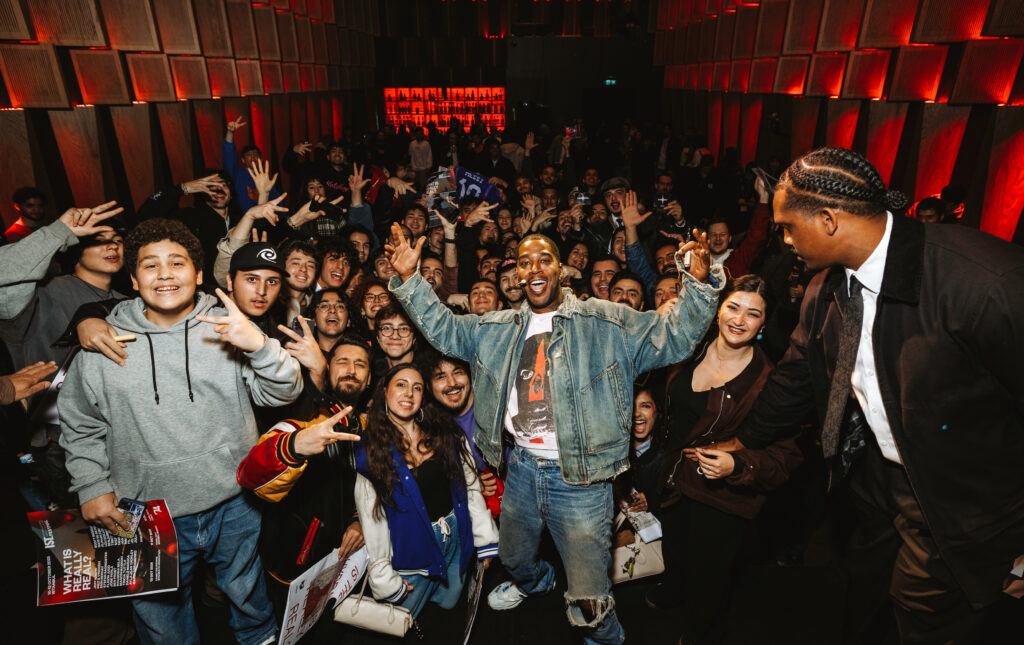
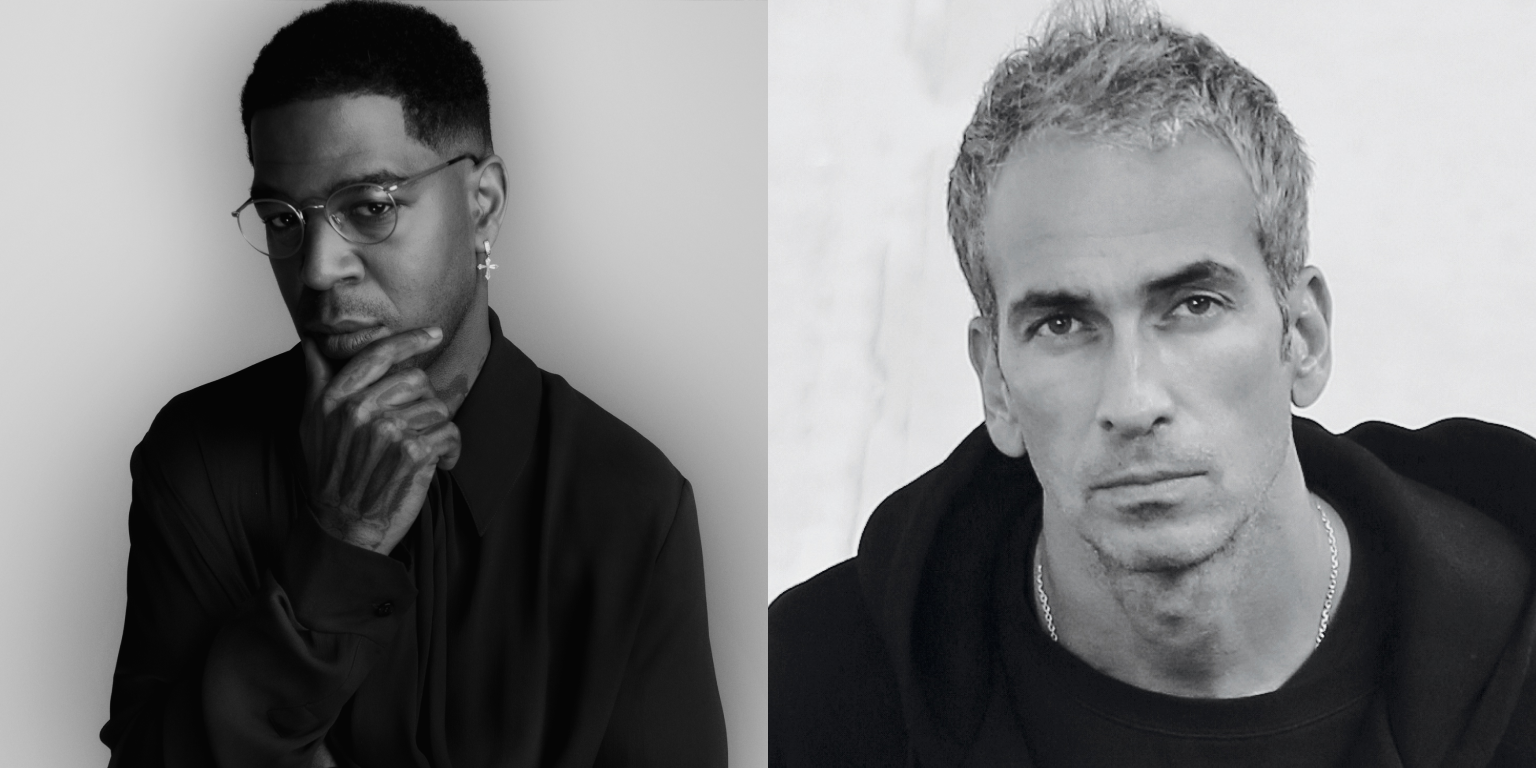
The final panel of the first day of the 15th Anniversary Edition of the Istanbul International Arts & Culture Festival — IST.FESTIVAL — featured Scott Mescudi (Kid Cudi) in conversation with Alphan Eşeli, titled Dreaming Across Worlds. Together, they reflected on creativity as a process of translation, exploring how emotion, imagination, and narrative shape new realities. Their discussion traced the artist’s role as both dreamer and architect, constructing worlds that feel at once intimate and mythic.
Alphan Eşeli First of all, welcome to Istanbul. It’s a real honor to have you here. I am super excited because of a bunch of reasons. First of all, you’re an incredible musician but when we started the festival, our aim was to create a festival that’s multidisciplinary, and when we do the lineup, we always try to be fair, have filmmakers, people from literature, people from art, everything but… It’s probably the first time we have an artist who covers all the fields. So maybe next year we will only invite you. With the exception of architecture.
Scott Mescudi Yeah, yeah, yeah. Maybe, maybe in the future we’ll see.
Alphan Eşeli So, to start, let’s go a little bit back. You were born in the 80s, and you grew up in the 90s. And I think the 90s were such an electrifying time in terms of pop culture. I mean, the music was incredible. Music videos, the golden age, they were monumental, a lot of production. Some of them were almost like museum pieces, art films. Fashion was fearless. Television was going to another level; Twin Peaks, Sopranos, everything was happening. The sonic landscape, the visual landscape, it was incredible. And also, I think it’s the first time that all these disciplines started melting into each other.
Scott Mescudi Yeah.
Alphan Eşeli So, looking back, how do you think growing up in the 90s in this environment affected your work?
Scott Mescudi Oh man, it’s crazy because I actually talked about this with a friend of mine, like the 90s really molded me to be the person that I am, you know, movies, music, fashion, these are all things that still live in my aesthetic today. Even when I’m designing for my clothing line, you’re thinking about old cartoons for color palettes and things like that, that I grew up on. Even when I’m writing scripts, I kind of hark back to the moments of early horror, some of my favourite dramas that I grew up on, Stand By Me, which is a classic, and it’s one of the movies that really inspired me to be an actor. Even the way I dress. I dress like Danny Tanner from Full House. Slash Seinfeld, a little bit. So, it’s crazy, at 41 years old, I pull from that era all the time. Even in my art, because my paintings are very playful and it is kind of a reference to all the cartoons that I grew up on. Whether it’s Ren and Stimpy or Doug, all the Nickelodeon shows and stuff like that, which I don’t know how many people my age or remember; Do you guys remember Ren and Stimpy and Doug? Yeah, these were the shows that molded me.
Alphan Eşeli Nice. Incredible. So, you started drawing. That was your passion very early on.
Scott Mescudi Yeah, yeah, yeah.
Alphan Eşeli And then, when did you decide exactly to become and switch into music and say; ‘’Listen, I want to do hip-hop?’’
“I think the key thing that everybody should have in mind is that you, it’s gonna require some work and you got to put into work at a time and over time you become a master. It’s just something that takes growth”
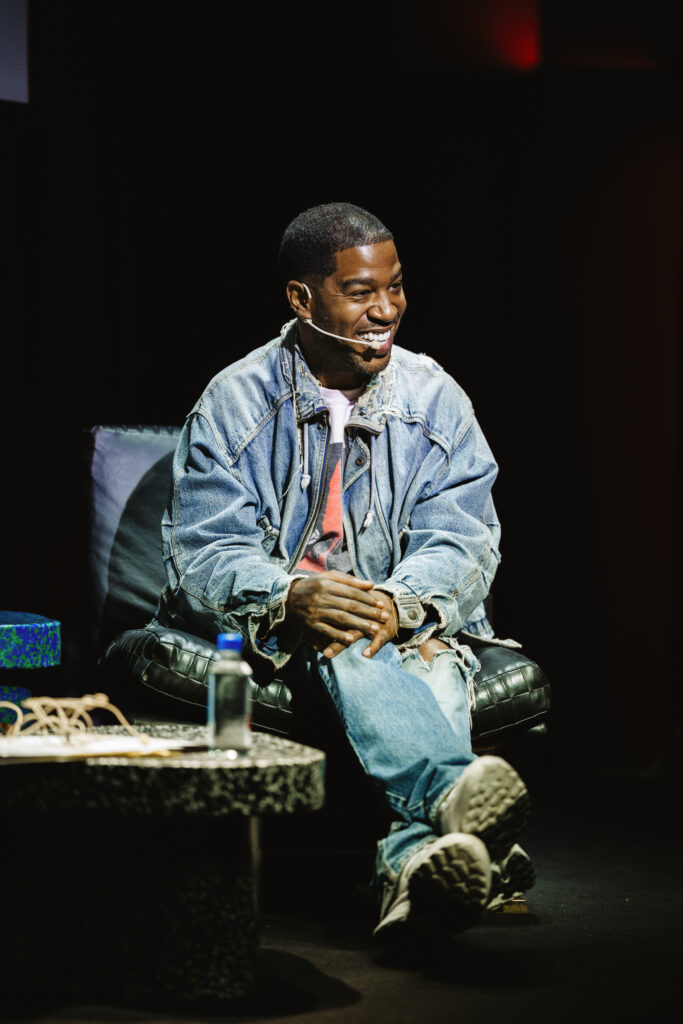
Scott Mescudi I think I wanted to be a cartoonist up until I was 15, and then I had this wacky idea to be a rapper, and that kind of took me over. The idea about being a rapper, and especially in that era, was exciting for me. I was young. I wanted it to happen when I was younger. It didn’t happen until my mid-20s, but I was starting to pursue a career in music at a very young age. And it’s one of those things, like even now, getting into the art, it’s like I’m rehashing old things that I used to be into when I was a kid, you know, wanting to be a cartoonist, and I’ve been doing music for 17 years, got 13 albums. I just released my 13th album a couple months ago. Now, at this point in my life, I’m like, “What else can I accomplish, what else could I learn?” Because I’m a student, I just always want to grow and learn and see what else I can accomplish. Because I do believe that one could do anything they want to do, anything under the sun, as long as they put their mind to it and they’re able to work hard. We talked about it backstage a little bit about how I have, how I had so many jobs when I was a kid. My wild work ethic is so crazy because I’m not afraid to put in the work. You know, acting is work. It’s a lot of preparation that you have to do for it. And I don’t know, I think that’s the key thing that everybody should have in mind is that you, it’s gonna require some work and you’ve got to put in work at a time and over time you become a master. And it’s just something that takes growth.
Alphan Eşeli And I read your book, Cudi: The Memoir, it’s incredible. I highly recommend it. It’s a page-turner. It’s honest, there are a lot of events. He grew up in Cleveland, Ohio, and I grew up in Ankara, Turkey, which is like two cities. They have nothing in common, I guess. But there are so many things in that book I can relate to. And what really, really impressed me is your, no matter what circumstances you are in, you had lots of ups and downs emotionally, but you were always methodical and hard working. But I wonder, when it comes to the creative output, who’s the decision maker, your mind or your heart?
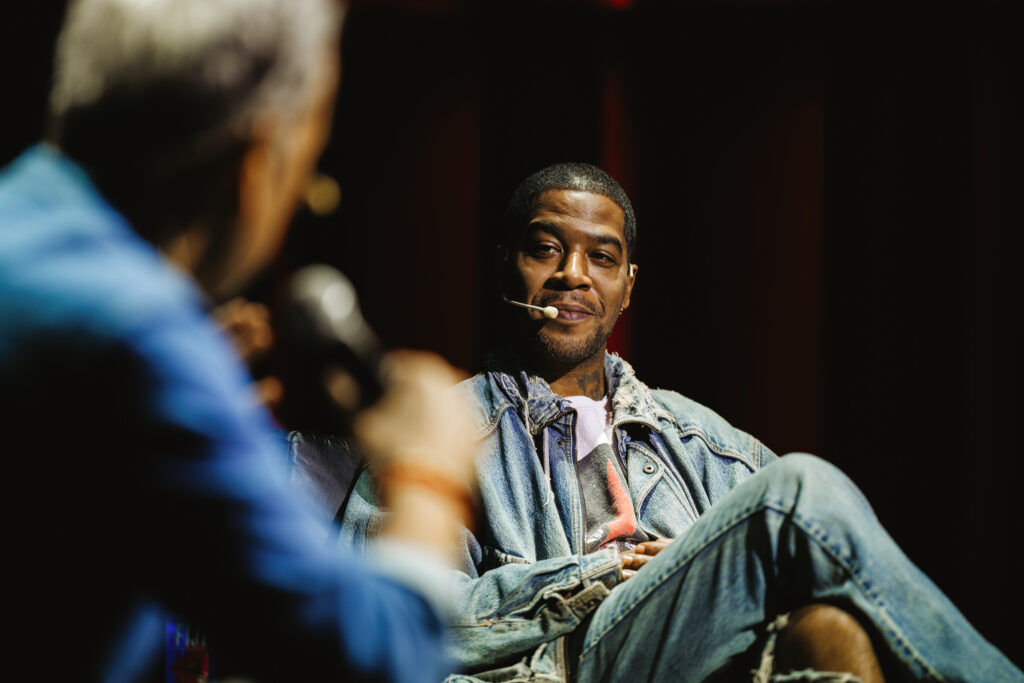
“For me, everything is based off of a feeling, emotionally, you know, my artwork, how I met my wife and I decided to marry her, you know? It was a feeling. Everything in my life where it led me to something, it was all based on how I felt in the moment. Because if I let my mind kind of run things, I don’t think I would ever be able to accomplish half of the stuff that I’ve done.”
Scott Mescudi Okay, that’s a good question. I would definitely say my heart. Everything is based on a feeling, emotionally; my artwork, how I met my wife and I decided to marry her. It was a feeling, you just, like everything in my life, where it led me to something, it was all based on how I felt in the moment. Because if I let my mind run things, I don’t think I would ever be able to accomplish half of the stuff that I’ve done. Because our minds are always kind of like the angel and the demon battling over and over about, ‘’Oh, you can’t do that. That’s too hard to do. Oh, but you can put your mind to it.’’ And it’s like this battle, but your heart is gonna just do this thing. This is like you could do it. Follow, follow this, you don’t like, just don’t worry about your mind, just because, in our heads, we can always come up with different scenarios about why it wouldn’t work. And we can psych ourselves out and block ourselves from the dream. So everything is all feeling with me. I never go into the studio thinking about what’s hot, what people are listening to, what’s popping nowadays. What I like is something that I could create to give people a new experience.
Alphan Eşeli It’s incredible. And no matter if it’s successful or not, there are moments, any moment, it’s a really bad thought but, regret. Do you have those moments, do you look back and say, “Wow, I could have done this differently or maybe I should have done, I shouldn’t have done?”
Scott Mescudi You know, I’m going to say no, because with every album I’ve ever done, when I turn it in, I am completely content. I know that I gave it my all, I know I think it’s perfect, I think it’s dope, the mixes are great, the master is great, the track list is great, the flow of the album is great. And every time I turn in, I’m just kind of like, whatever happens, happens. At the end of the day, I like it, I know it’s masterful, and I put a lot of work into it. So I don’t have any regrets with any of my art, because I don’t know, I just don’t. I just kind of let the chips fall where they may, but on that day I’m thoroughly happy with every decision I made as an actor, and as a musician.
Alphan Eşeli And your acting career and musical career almost kicked off at the same time. Yeah, they did. It’s a coincidence. Were you ever like, “Yeah, maybe I should be an actor” or was there any confusion or?
Scott Mescudi Well, you know, I got discovered at a bar. I was fucking wasted. And this dude comes up to me, and he’s like; ‘’Hey, I’ve got this HBO show. Have you ever thought about being an actor?’’ And I was just kind of like, because in my mind, I’m like a one dream at a time kind of guy, especially at that stage. I was kind of just like, let me accomplish this one dream first. And then, of course, branch into acting, because like I said, I always wanted to act. But he sent me the script, and I loved it and I went through this long audition process, and I ended up getting the role. I was not expecting it because the character that I was auditioning for was Dominican and I’m black and Mexican, but… There were certain things like the character needed to know Spanish, and they had to cast around me and I didn’t, you know, I was telling the creator of the show, I’m like, dude, like, I’m not Dominican enough. I don’t know if this is going to work, you know, but it turns out the creator of the show called me two days after my final audition at HBO headquarters, and he goes, Scott, I got some good news and I got some bad news. And I was like “Okay, tell me what the bad news is first.” And he’s like “The bad news is you didn’t get the role.” And I said, “Okay. I figured that, you know, makes sense.” And I was thinking that the good news was maybe they want me to do the theme song or something like that. And he says, “The good news is that they love your audition so much that they want to create a brand new character based on your energy. And they want you to style him and name him.” And that’s kinda how Domingo and Dean were born on How to Make it in America. He didn’t exist early on. It’s because I didn’t know how to read a script, I just looked at it and I was like, “Hmm, they said this was a comedy. These scenes can be funnier, let me make it funnier.” So you know, I’m doing my thing and showing my personality and all these things and they loved it. I mean, even when I was doing the audition at the HBO headquarters, when you do these kinds of auditions and you have all the execs in the rows and they’re all looking at you, they’re not really supposed to show emotion. They’re not supposed to let you know that you’re doing a good job. And what I was doing was so impactful, like people were laughing, really enjoying the performance and I always, when I was doin’ it, I felt that that was a good thing. But I never imagined I would get the role or get a role or be involved in the show at all, so that was pretty much my first blessing from the Angels.
Alphan Eşeli This is the time when you’re in New York, you’re switching apartments, you have lots of jobs, changing all the time, and the last job is bait. And then, on the other side, you land a record deal, the first one. That also happened simultaneously. So how big was the change, all of a sudden? You have a record deal. You’re an actor on HBO. You have money and cash in your bank account.
Scott Mescudi Yeah, it was crazy, man, because, you know, I had a hard time dealing with the fame. At that point I was 25 years old. You spend 25 years of your life just being a dude, just being a normal guy, and walking up on girls at the bar and getting declined for a dance, and then all of a sudden, everybody’s in your face and they want a piece of you. And that was the part that was hard for me, you know, it was really hard to navigate and that’s why I struggled for a while in the earlier part of my career because, you know, you think that having money will fix all your problems and that’s exactly what I felt at the time, but I was dead wrong, it didn’t fix anything, it just brought me more problems When people say it’s lonely at the top, that is very true. You know, I find myself alone a lot in my apartment, not having anyone to talk to and just being with myself and my music and at that time you know I fell into use of cocaine so that was something that kind of helped me cope with with everything and it was a very dark time for me and it was hard for me to understand because no one could prepare you for fame there’s no way to really brief or prepare anybody for that. It’s something that is unexplainable, and it happens, and it’s just like; ‘’ Whoa, what the fuck’’, you know. My earlier years were definitely a struggle for me. Just that switch from being a regular guy from Cleveland, Ohio, to being this superstar standing next to Kanye West and everybody knowing your name, you know?
Alphan Eşeli I’ve always thought the second album—or the second film—is the hardest. Once you succeed with the first one, you’re suddenly introduced to fame and everything that comes with it. Then the contract kicks in, and it’s time to get back into the studio. But how do you switch back into the mindset of the person who created Pursuit of Happiness and that first album? Did you struggle with that? I find it really difficult.
Scott Mescudi Yeah, the follow-up is the most important and there is a thing that people talk about which is the sophomore slump. A lot of people that you know fail to deliver on their second project and even in movies. You know when you see sequels of a movie in them the sequel is terrible but you have a lot of instances where like the sequel is as good or better than the previous film, than your first film, you know? And my goal with this was like, all right, I know people are expecting this album to be terrible because the first one was so good and we’re just a year away from it. And like to come back with something so soon, I don’t think people are prepared for this to be good. So let me just kind of take a step back, not try to recreate. Pursuit of Happiness, not trying to create Day and Night, not trying to create the magic that was the first album, but trying to create something new. And at that time, I was dealing with a lot of darkness. And I was kind of making these really dark songs. And that ended up being, you know, the tone of the album. And, I don’t know. I had this really gnarly rock and roll mindset where I didn’t give a fuck what anybody thought. I was really just doing what I wanted to do. And at the end of the day, if people liked it, cool. If they didn’t, cool, it didn’t really matter to me. I was just trying to make what I liked. And so I went in just trying to create a new experience, something different. I never want to repeat myself, so that was the mindset. And it ended up doing much better commercially than my first album and to this day that’s the album that a lot of people come up to me and say that that’s the album that really helped them the most and that they love the most and and Mr. Rager is one of my most popular songs and people still bump that song today. It’s like all over TikTok and stuff like people really really get into that one. So this is a beautiful thing to see that like people connected with my struggles and it helped them in some way and after I finished that album I was like “Okay they like it so after this I can just do whatever the fuck I want and it’s all good.” Like nobody’s going to be on me because I did my first two albums and I did classics and I’m good.
Alphan Eşeli And then I always wondered, because in your book there’s a very unexpected reference, but at the end we talked backstage, the crash test dummies. You said that they were influenced by your songwriting and your storytelling in music. Can you tell us a little bit? And also… How do you work? Do you write the words, the lyrics first and then drop the beat, or do you have a beat and, how does it work?
Scott Mescudi Okay, so the first part of it, Crashed S Dummies came into my life when I saw the film Dumb and Dumber and it was in the movie and I remember hearing it on the radio all the time and I fell in love with it and my classmates, we would talk about it and just talk about how silly of a song it was and I think I was in fourth grade at the time, and I begged my mom to buy the album. And she took me to Sam Goody, which is this store back in the day in the 90s. They don’t have any more, but it’s a store where you wouldn’t buy CDs and tapes. And I listened to that album front to back all the time, you know, and it was something about the songwriting that I didn’t know was at the same time influencing me for the future. You know, God shut with his feet. And Mmm, which is the name of the song. I know this sounds weird, but it’s called Mmm. But I just loved the storytelling in it and that ended up being my approach in music later on in my life. And I’m gonna answer your second part of the question. What was the second part?
Alphan Eşeli About your songwriting and how do you do the beats first and then write the songs, or how does it work? Is there a formula or just…?
Scott Mescudi Well, it really depends. It’s always different. You know, a lot of times it could be a melody. It could be a beat that someone made, it could be an idea that kind of sparks it, and I’m running like, “Oh, I want something that sounds like this, like Pink Floyd-ish, but like hip-hop, you know that fusion. But early on, I used to kind of sit in the room and just write my raps, listen to the beat over and over on loop. But now I kind of go in the studio and I freestyle a melody. And then I go back and I write to the melody I try to find, make sense of the mumbles. So it’s like, I find that is a really good way to get the real instinct. Because when you’re freestyling, you’re not thinking, you’re just kind of doing and letting, and feeling the beat and feeling the ride and I think you get the realness out of that performance and it’s different when you’re sitting there and you just have your pen and paper and you’re just listening to a beat over and over and you are just like this, and you like writing to it, and you were just trying to, but in your head you’re thinking about the line maybe for five minutes before you write it, and then there’s all this time to think about the melody and the approach and what you’re doing, and doing it this way where I freestyle the melody and figure out. What I’m trying to say seems to work better, you know, it’s almost kind of like I feel like I’m hearing echoes from the future. It’s almost like I hear like a little bit of the song finished already. And when I’m holding it, when I’m doing the mumbles and that’s why, like every time I go in to transfer to lyrics, the lyrics always work. You know, I always figure it out. I’m never like, “Oh, this is not working.” I can’t figure out what I’m trying to say or what I was trying to say in the freestyle. It always plays out. So yeah, it really depends, man. And the inspiration comes from different things. It’s mostly my life that inspires me.
Alphan Eşeli And talking about your life, going back to your memoir, I once again highly recommend it, it’s an incredible book, but to revisit some moments, there are some very difficult and dark moments, especially like the loss of your father at a very early age. Was writing that book, was that a redemption, or was that just It’s a necessity to get out of it?
Scott Mescudi I think it was a necessity to get those things out. I hadn’t talked about my father or my family in that much detail ever before in an interview and I wanted to be as thorough as possible and bring people into, you now, the mindset of a young 11 year old Scott and what his death and what a few of of my close ones deaths in my life did to me emotionally and mentally and how it altered everything for me. I think before my father died, I was a different Scott. I was really a happy kid. A lot of energy and after my dad died, I kind of just lost that spunk in my life, and though I would be my friends and I’d be having fun, but I spent a lot of time at home by myself. In my room, drawing, just trying to keep my mind busy and off of the reality that I just lost my dad. But it was very important to talk about this in the book because I know people can relate to my story in such a way. People that I’ve lost parents at a young age. Because when you lose a parent at a young age or any age really the hole in your heart never gets filled, like it’s there forever and over time you learn how to find peace with it but there’s nothing that can fill that hole up. That’s just lost for life. You’re always going to miss this person and every time you have a moment in your life, a milestone, you always go back to. I wish my dad or my mom was here or things like that. Even with me, I got married this summer and before the wedding started, I was just like, “Man, I wish that my dad could see this.” And it’s been a long time since my dad died and I still have those moments where I’m like “Man I wish my dad could see this.” Even when I first got successful I was like “Man, I wish my dad could see it” but the thing is it’s like he does see it. He sees it all, he’s watching, he’s responsible for these blessings so that’s one thing I have to remind myself it’s like even though he’s not here in a physical sense.
Alphan Eşeli And also, you’re someone who doesn’t look to the past that much. You’re always involved with the future, new things, creating, and that must be really difficult for you at some points to go back and revisit and write your memoir.
Scott Mescudi Yeah.
Alphan Eşeli Because you’re very prolific. I will assume you’re always pushing forwards and looking to the future.
Scott Mescudi Always. It’s definitely like one of those things that fuels my fire. It’s like; what else can we do? What else can we do? What can we accomplish? Yeah, I put my mind to it. I can learn something, I can grow, I can be awesome.
Alphan Eşeli That’s painting and sculpting now.
Scott Mescudi Yeah, yeah, yeah. So, you know, it’s funny. On my Wikipedia, I have like 10 professions. And I told somebody the other day, I was like, “I won’t stop until it says 20 different jobs, 20 different things.” I just wanna keep trying new stuff and putting myself in uncomfortable positions because every time I try something new, it’s always scary, you notice that moment of fear, and then I get over it and it’s like, fuck that. Like I’m doing something a lot of people can’t do. A lot of people have a dream and they don’t know how to apply it. They don’t want to pursue it. They don’t know how to take their first steps into that journey. And I’m a master at that. Like I did this short film for Mr. Miracle on my album Free, and in it there’s a moment where I talk about being fearless and that’s true. Like, I really came into this business, came into music, come into anything that I do, with a fearlessness, you know? I don’t think about failing, I think I win every time, no matter what anything does commercially, it pays some doing, you now? And that’s one thing young people have to be reminded of. Look man, you notice so many people in the world that don’t go after their dreams. Go for it and keep perfecting yourself over and over and keep trying and keep trying. It’s funny because people, they see Kid Cudi and they hear Man on the Moon at the end of the day and they think that I just came in the game just like hot like that, making amazing shit. But I made a whole bunch of bullshit before, you know, and I worked at my craft and got better and I took it seriously. But you know you get to this point where you just have to not be in your head about it. And like we talked about before, let go with the feeling. And that’s never steered me wrong.
Alphan Eşeli It’s funny, the other day I read Albert Einstein. He said, “I never lost, I either won or I learned.” So he never accepted it as a failure or a deceit because at the end of the day, I think we learn more from our mistakes than our successes because success sometimes can also bring an unnecessary ego rather than, you know, you can get easily swept away by it. But I think. As long as you learn from your mistakes, you agree that mistakes are a good thing.
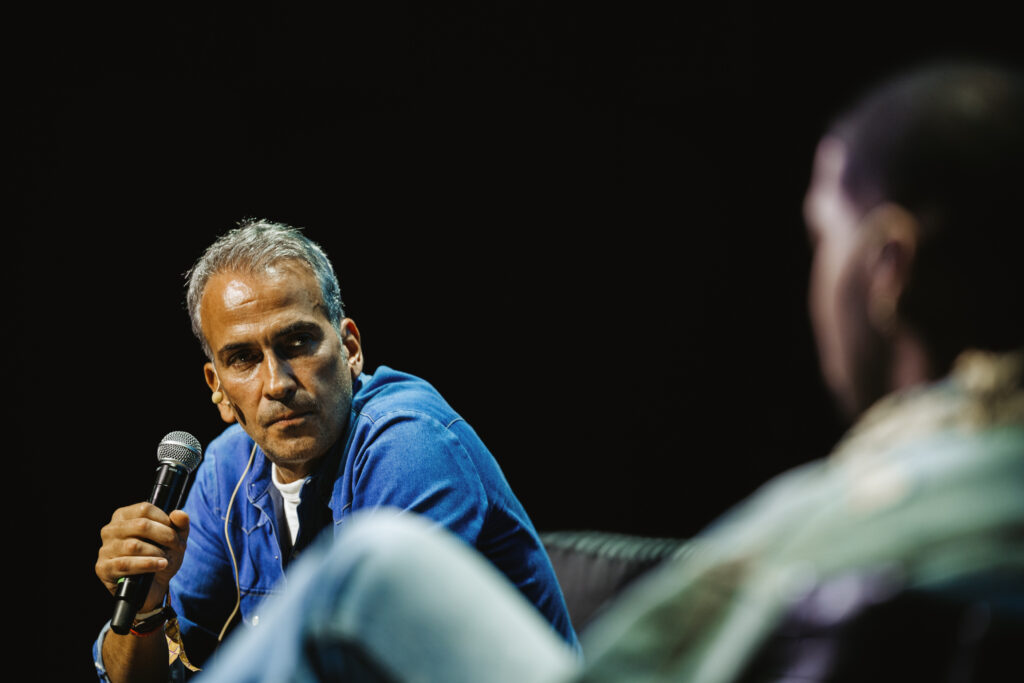
Scott Mescudi Yeah I agree it’s the only way you can learn and it’s the only way you grow. I’ve made a lot of mistakes when I was creating albums but I was able to figure out the mistake, make it better, fine-tune it and get it to a place where I was happy with it. It’s just something that comes with the battle to create art, to create music. It’s a lot of just trial and error. And just try new things, oh okay that doesn’t really work, let’s try something different, oh okay, I like this line, oh man, this next line can be stronger, I think I can come in harder with that, like let me try this, oh that flows better, okay cool. It’s just like trying different things and that’s what the process of making an album is about. It is like you sit there for about a year and you just create a bunch of shit. Like, even for Man on the Moon, In the Day, or for any of my albums, I make about 30 to 40 records each album. And I only choose 18 or 15 or 19 or 20. So there’s a lot of records that I’ve made over the years that didn’t hit or didn’t make me feel something or I was just like “This is cool but I have like 20 other songs like this, let me try something else. Let me make a new song.” It’s all about trial and error and just going for it.
Alphan Eşeli And then, I know we talked about this, you started drawing at a very early age, it was one of your passions; art. But at this stage, to go into art, was that like a leap forward in creativity, like you wanted to express yourself in another medium?
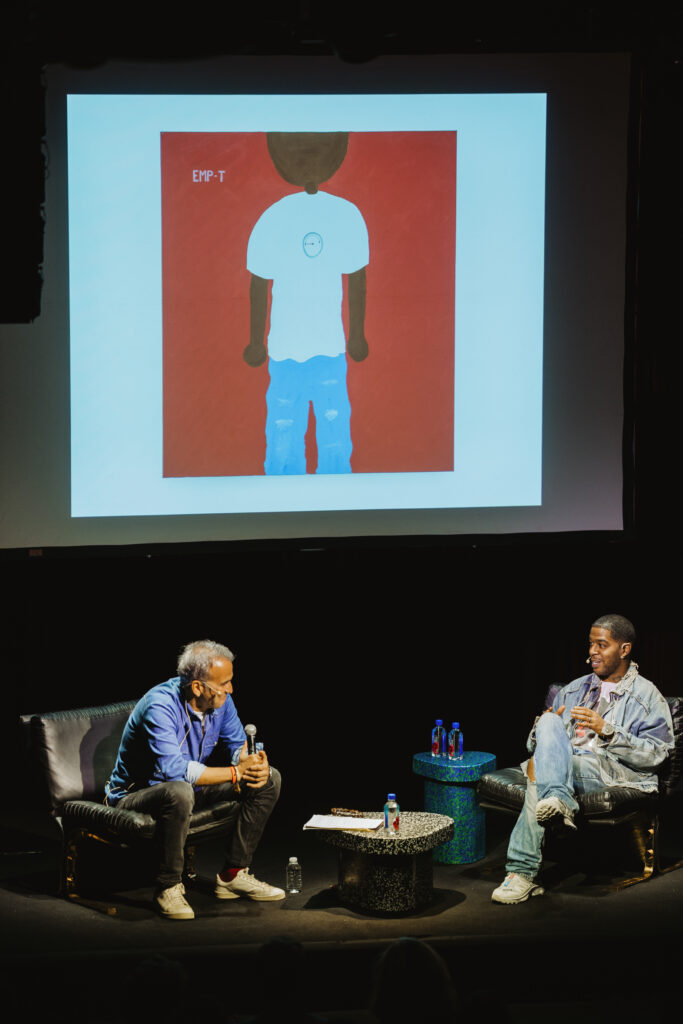
Scott Mescudi Yeah, I think my whole life, ever since I was a kid, I just imagined painting being something really difficult. Something that you needed training to do. And it wasn’t until last year where I was kind of like, “You know what, I always wanted to paint, I need a new hobby, I need something to do outside of music.” My original thought was not to pursue this as a career or do a gallery or do anything. I just wanted to paint and I think about after a week and a half, I did like maybe 10 paintings and I felt that they were all pretty strong. This is one of my first paintings. This happened in the first week, week and half. And I don’t know, it reminded me of my youth. It reminded me of all those days I spent in my room alone, just drawing. Like the freedom that I felt when I would draw, it’s still the same with painting. It’s the one thing that I do, and like you said, I do a lot, right? But it’s one thing I do where my mind is completely shut off. And I’m not thinking about it, I’m just kind of doing it. When my brush is hitting that canvas, and I have my classical music playing, I am just totally in this peaceful state, I’ m so fucking happy, but it’s crazy because a lot of the paintings can be considered disturbing. I want my paintings to have the same type of impact that my music does, where they’re more like warnings or they teach you a lesson in some way. And my first exhibit that I’m doing in January at Rakowski Gallery in Paris, the title is called Echoes of the Past. And these are all the different moments of despair and pain and all the things that were going on in my life early on when I was younger and earlier in my career. And I want people to see these paintings and take a lesson from them. It’s like the perfect painting to describe what I felt in my youth. And that’s just what moved me. But I showed some of my work to my mother. And she was like, “Oh, this is good, but it’s dark. Maybe you should paint the light.” And of course, I got defensive. I was like no, this is what I’m feeling right now. I’m an artist. I guess this is what I am feeling. But then later on that night, I thought about it. And I was like, “My mom is right.” Just like I’m expressing the darkness, I should, you know, express the light and show people what that looks like. And so the first collection of paintings is a journey between the dark and the light, and how I came out to the other side.
Alphan Eşeli And in my notes I have something I wrote, we need to talk about Max.
Scott Mescudi Yes, this is Max here.
Alphan Eşeli So can you tell us a bit about Max?
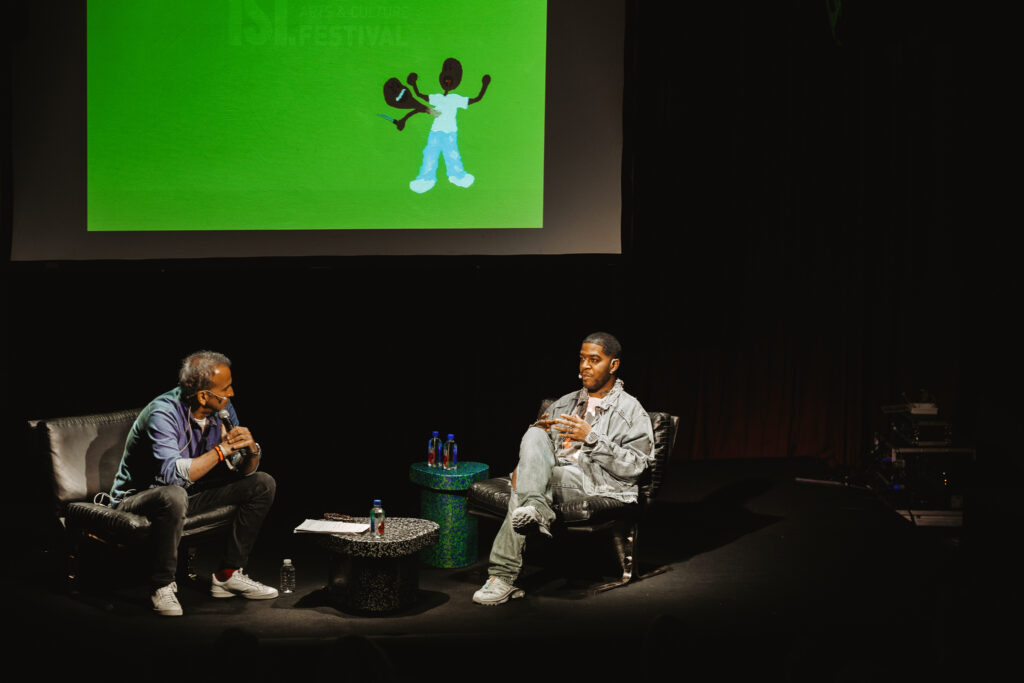
Scott Mescudi Yeah, at first I was thinking Max with me, and I think he is me in some way, but like it’s not me literally, it’s like the inner child of me, and I put Max in these situations, like this one in particular, this is about self-sabotage and you being your own worst enemy. And, so I use Max as a kind of a direct through line to Scott Mescudi in my art and I don’t know I just think that you know it was better to have a character rather than just be like me doing paintings of myself.
Alphan Eşeli Up comes filmmaking, which is your next step. You’ll be directing your film very soon. And, I mean, you’ve been very familiar, you’ve acted in a lot of films and TV series, but as an actor, you’re always a part of something you’re invited as an actor to participate in this vision of the filmmaker and the production… It’s already there but now you’re going to be acting and directing so it’s going to be closer to your music production where you’re to be in charge and responsible for everything. So how do you feel about it?
Scott Mescudi Uh, scared shitless.
Scott Mescudi But I use that fear as fuel. I mean it fuels me and I mean if it doesn’t scare me then it’s not worth doing. Like if something seems easy then I’m more likely not going to do it. I like the challenge and people always tell me that directing and acting in your own movie is one of the hardest things to do as a filmmaker. But I’ve directed my own music videos. I’m directing like maybe five or six of my own videos and I find it really fun experience I’m the type of director where you know I come on set and it’s like alright y’all we making something cool and I get the energy up and have people feel like they’re being a part of something cool and and I’m friendly I’m not temperamental I’m like a kid in the candy store I’m just super enthused and excited to be doing something like this, like directing something I always want to do. So, I don’t know man, it’s something that I feel will be, it will give me something new that I haven’t felt before. And like I said, it is a challenge that I’m thoroughly excited about.
Alphan Eşeli I can’t wait to see, I wish you all the best, good luck, and I know there’s a lot of people waiting to ask questions.
Audience I’m one of your biggest fans since 2009.
Scott Mescudi Thank you for listening man, all this fun.
Audience In my darkest times, your moon and your light guided me and showed me the right way. Thank you so much. You saved my life a lot of times.
Scott Mescudi Oh, thank you.
Audience I just wondered, in the future you said you won’t do music for a while, but in the future do you think you will do music again?
Scott Mescudi Do I know when I’ll be doing the music again is what you’re asking? Yeah, oh yes, yes. Music is inside me man. But I have to remind myself when I get into these moments like “Scott, you’re going to be making music until you’re 80 years old. Like you, melodies live inside you, in your heart. You know, like you can put it on pause for a little bit. You know you won’t release anything, but you will still be in the studio creating.” And that’s just… I guess that’s who I am. I’m always going to be a musician at heart and now I’m doing a lot more producing. I haven’t produced a lot of my stuff in years, but I’m finding excitement in that and just exploring different sounds and different sonics. One of my favorite things I do is to get new sounds and try to create something that I haven’t heard before. So, yes, I’m not retiring, just to clear that up. I will be back, it’ll be a few years, but don’t get it twisted. I got like two albums already finished in the chamber. Just waiting, you know what I mean?
Audience I just wanted to ask, what kind of legacy do you hope your art and your music leaves behind?
Scott Mescudi I hope the music leaves lessons for people that they can use in their own lives. When I’m gone and I’m no longer here, those messages will still live on and they’ll help generations and generations through their darkness in their most vulnerable times. That’s always been my mission. That’s been most important to me is to help kids. My angle when I first started doing music was like, “How can I create something that I didn’t even have when I was a kid? “ I listened to a lot of hip hop, we talked about this backstage, it was a lot of hip-hop I grew up on. But like, I didn’t connect to Jay-Z. I love Jay-Z, love Tupac, love Biggie, love all these guys, but I didn’t see myself in their stories. So, when I first started doing this and was really thinking about a career, I was like, “What can I provide that doesn’t exist?” And that was one of the things like talking about emotion, talking about struggle internally. You know, going through something and coming out on the other side. And that’s my hope that the lessons live on and help people to the end of time.